Repairs · Newmarket
Garage Door Panel Replacement in Newmarket
After an overnight freeze the door stuck to the slab, the opener strained, and something gave.
In plain words
Trade guidance treats a garage door as a system: sections, hinges, rollers, tracks, cables, springs and opener all depend on one another, and an impact on one section rarely stops there. That is why a section replacement includes checking what the damage did to everything connected to it. A bent hinge is replaced, a roller that jumped is checked for a flat spot, a track bracket that shifted is reset, and the spring balance is re-measured with the new section's weight in place. The section is the visible part of the repair; the alignment and balance work around it are what make the door run true again.
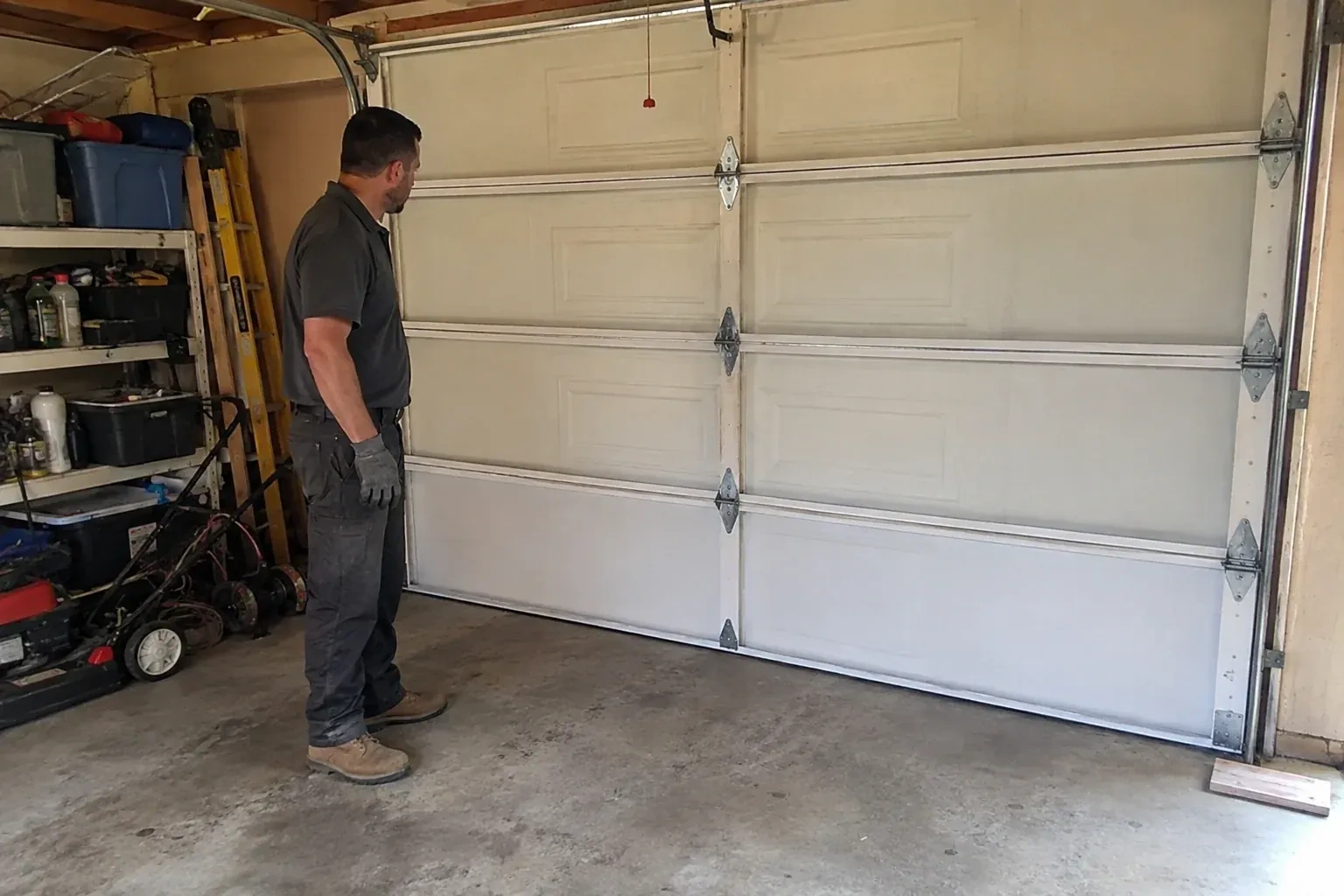
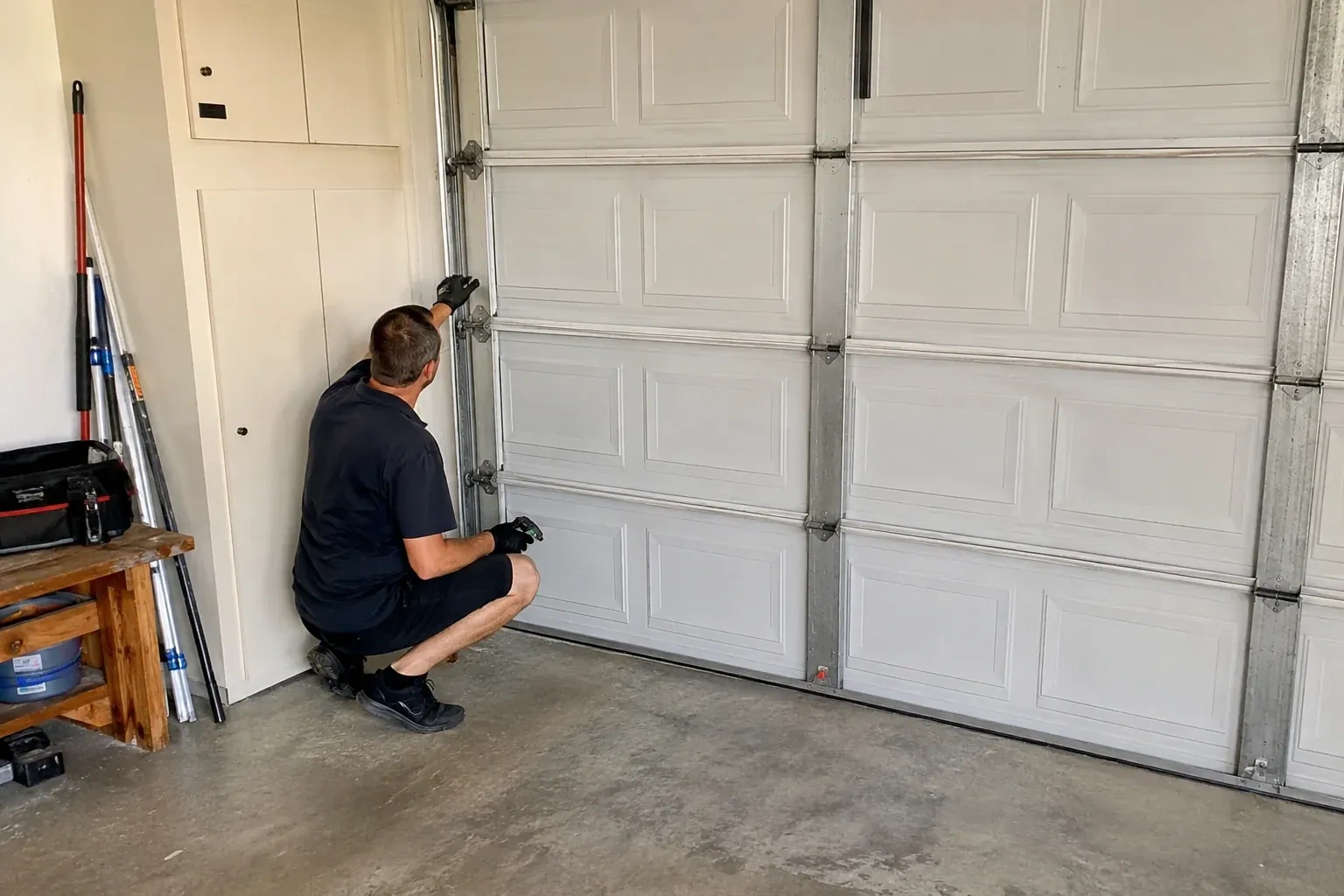
How the visit goesThe inside face of one section has started to bow outward and the outer skin has a soft, wavy look. Tap it and it sounds hollow in places. The door is insulated, and the foam core seems to have parted from the steel.
Garage Door Panel Replacement
How the visit goes
Keeping the door safe until the new section arrives
Because a section is ordered rather than pulled from a shelf, the first visit ends with the door in a safe state for the wait. If the damage is cosmetic, the door can usually stay in normal service. If a section is folded, a hinge has torn out or a cable has gone slack, the technician braces the section, disconnects the opener so it cannot pull on a weakened door, and secures the door in the closed position. Sometimes a temporary strut will let a bowed section run until its replacement comes. You are told plainly which of these applies and what to avoid doing in the meantime.
Locking the door before anything comes loose
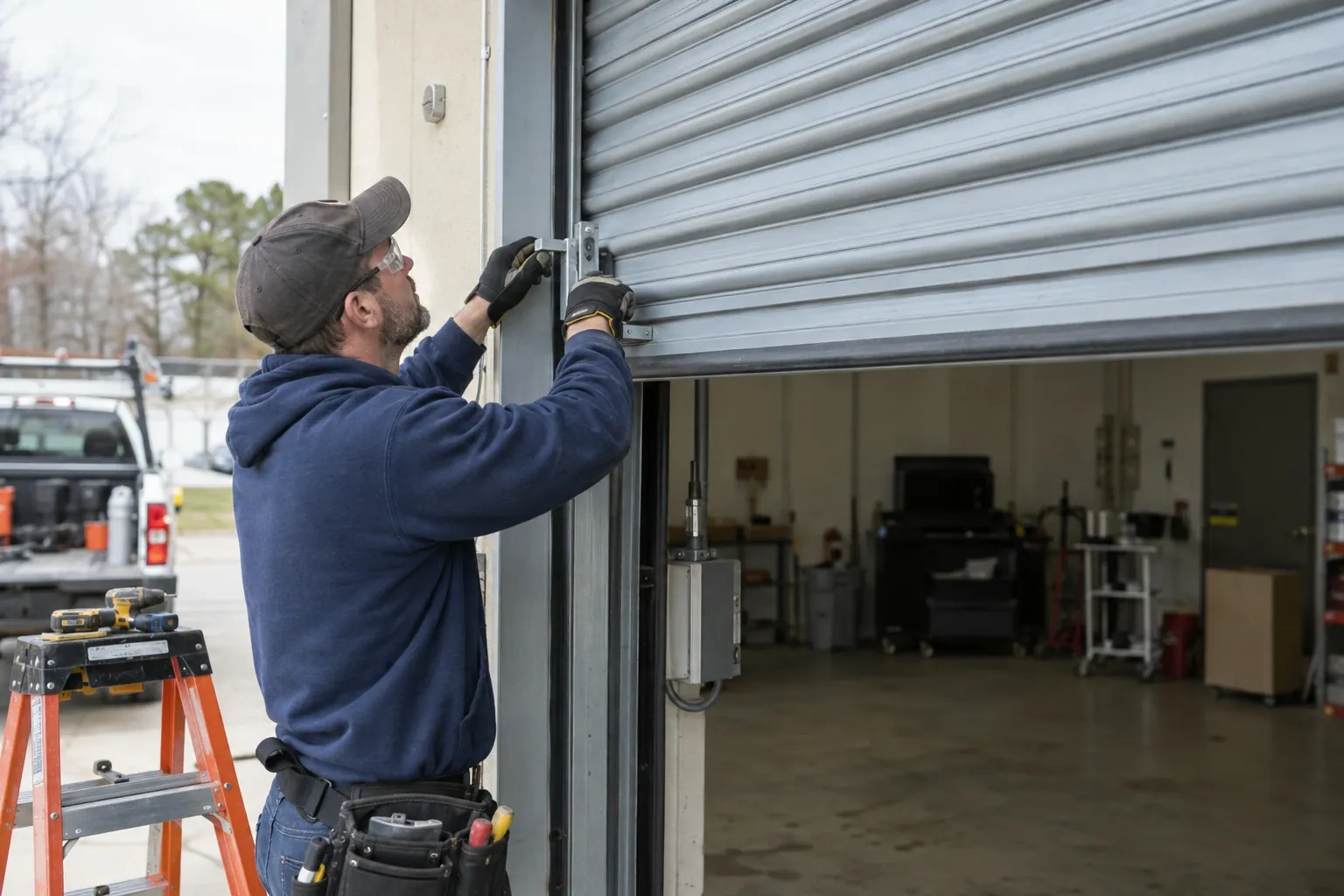
The exchange begins with the door closed, the opener disconnected at the release cord and its power unplugged, and a pair of locking pliers clamped onto each track just above a roller. Held that way, the door cannot creep up or slip down while a section is missing from it, and the sections above the gap have something to rest on. The technician then removes the section's rollers and hinges in an order that keeps the neighbouring sections supported, working from one side to the other. Nothing under spring tension is touched at this stage on a middle or top section; the springs stay loaded and simply hold still.
A door that runs as one piece again
When the work is finished the new section is indistinguishable in the way the door moves. The joints close tight with no daylight, the door rises without the shudder or catch that gave the damage away, and it sits level on the floor with the seal compressed evenly across its width. The technician walks you through the cycle with the opener and by hand so you can see the balance for yourself, points out the hinges and rollers that were replaced, and leaves the old section for disposal or takes it away as you prefer. Any temporary bracing from the first visit is gone.
Garage Door Panel Replacement
In the van
Adjustable top roller brackets
Horizontal reinforcement strut
Self-tapping stile screws
Winding bars and track clamps
Nylon or steel rollers
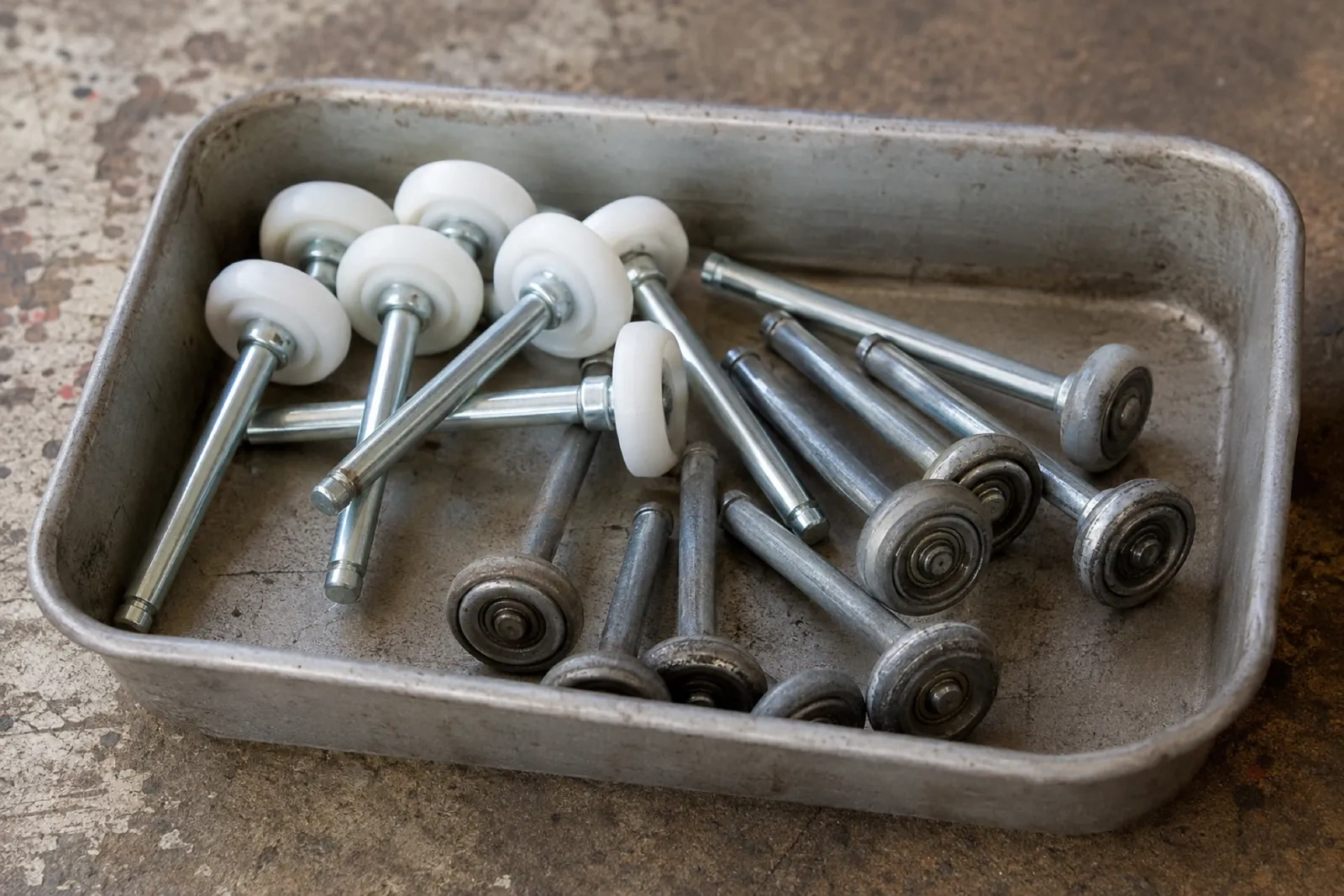
Garage Door Panel Replacement
What affects the quote
A make-safe visit while the section is on order
When the door has to be braced, disconnected or secured closed until the section arrives, that first visit is quoted as its own item, with the installation visit following once the part is in.
Which position the section sits in
A bottom section includes releasing and resetting spring tension and fitting brackets and seal; a top section involves the opener bracket and top fixtures; a middle section is the plainest exchange. The position shapes the labour.
Colour and finish decisions
The section comes in the manufacturer's current version of your colour. If you choose to repaint the whole door afterwards, or order a colour change across all sections, that becomes a separate item.
What to have ready
- Which section is damaged: the bottom, the top or one in the middle?
- Would you consider a whole new door if a matching section is unavailable?
- Does the damaged section have windows in it?
Garage Door Panel Replacement: questions
QuestionsHow should I look after the door after the section is replaced?
A little routine goes a long way. Each month, look along the hinges for loose screws, spin the rollers, and check the door's balance by lifting it by hand with the opener disconnected. Twice a year, apply a light garage-door lubricant to hinge pivots, roller stems and springs, and keep the tracks clean and dry. Rinse salt off the lower sections in spring, touch up chips, and keep the bottom seal clear of ice in winter.
Can a wood garage door section be replaced?
Yes, though wood doors are more often site-built or made in small runs, so a matching section may be made up by a door shop rather than ordered from a catalogue. The new section is primed and finished to match, the hardware is transferred, and the technician looks closely at the neighbouring sections for rot or splitting, since wood sections tend to age together. Where several are failing, a new door is discussed.
Why do bottom sections get damaged so often in winter?
Meltwater runs under the bottom seal during a thaw and freezes the door to the slab overnight. When the opener starts in the morning, it pulls on a door that is anchored at the bottom, and something yields: the section bows, a hinge tears from its stile or a cable jumps. Salt and slush thrown off the car then corrode the lower edge. Keeping the seal free of ice and rinsing salt away protects the new section.
Related services
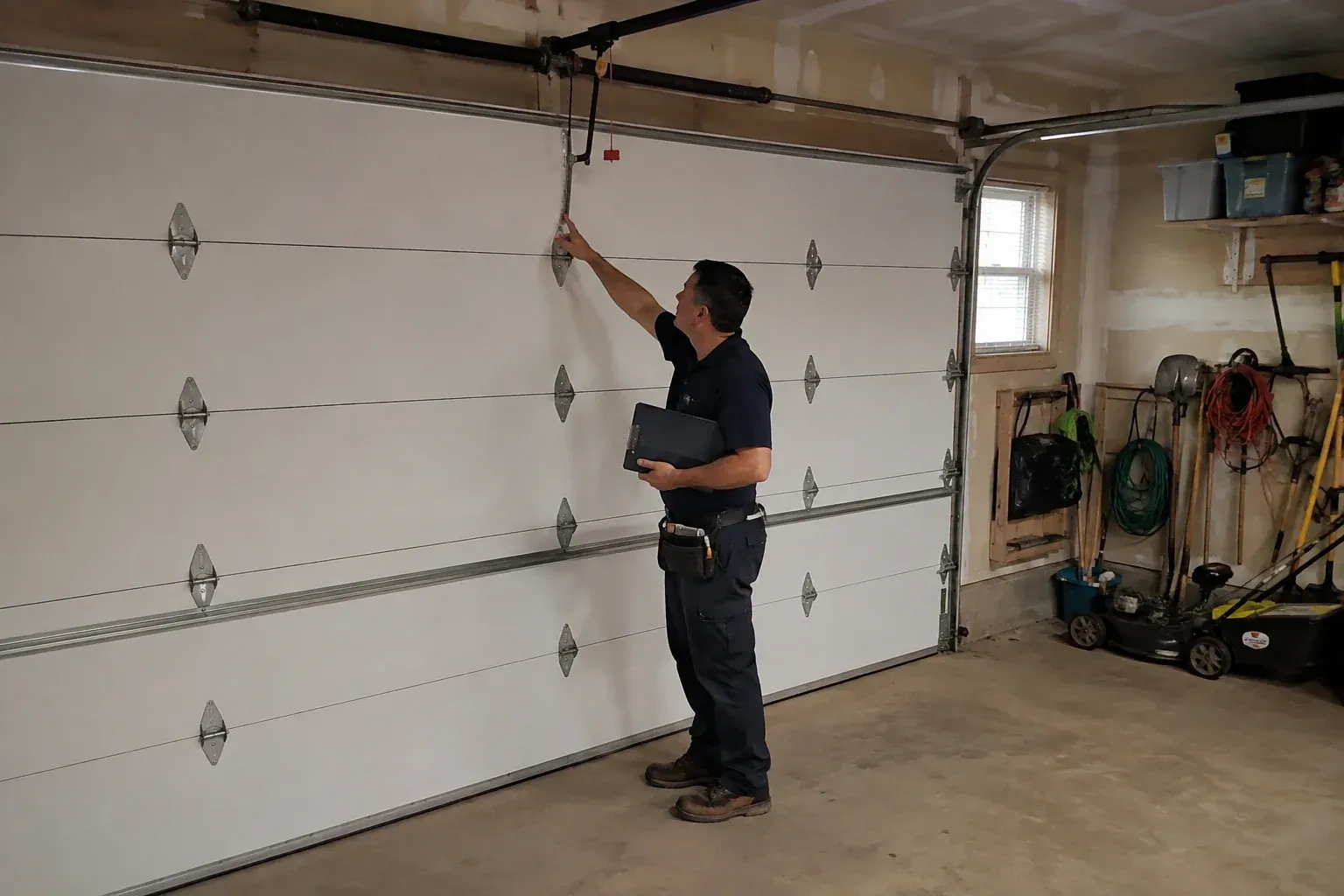
- Garage Door Tune-UpThe door lands with a thud you can feel through the kitchen floor, and sometimes it bounces back up a few centimetres before settling.
- Off-Track Garage Door ResetThe rollers on the door have been squealing for months.
- Garage Door Bottom Seal ReplacementThe gap under the door is a finger wide at one end and nothing at the other.