Garage Doors
Understanding your door
Frequently asked questions
Do you look at the door between the garage and the house?
If the garage is attached, yes, briefly. That door should be tight-fitting, weatherstripped and fitted with a self-closer, because it is the barrier that keeps vehicle exhaust out of the living space. A technician who finds it propped open, missing its closer or failing to latch notes it in the report as a maintenance item, alongside the overhead door findings.
What is the balance test and why does it matter so much?
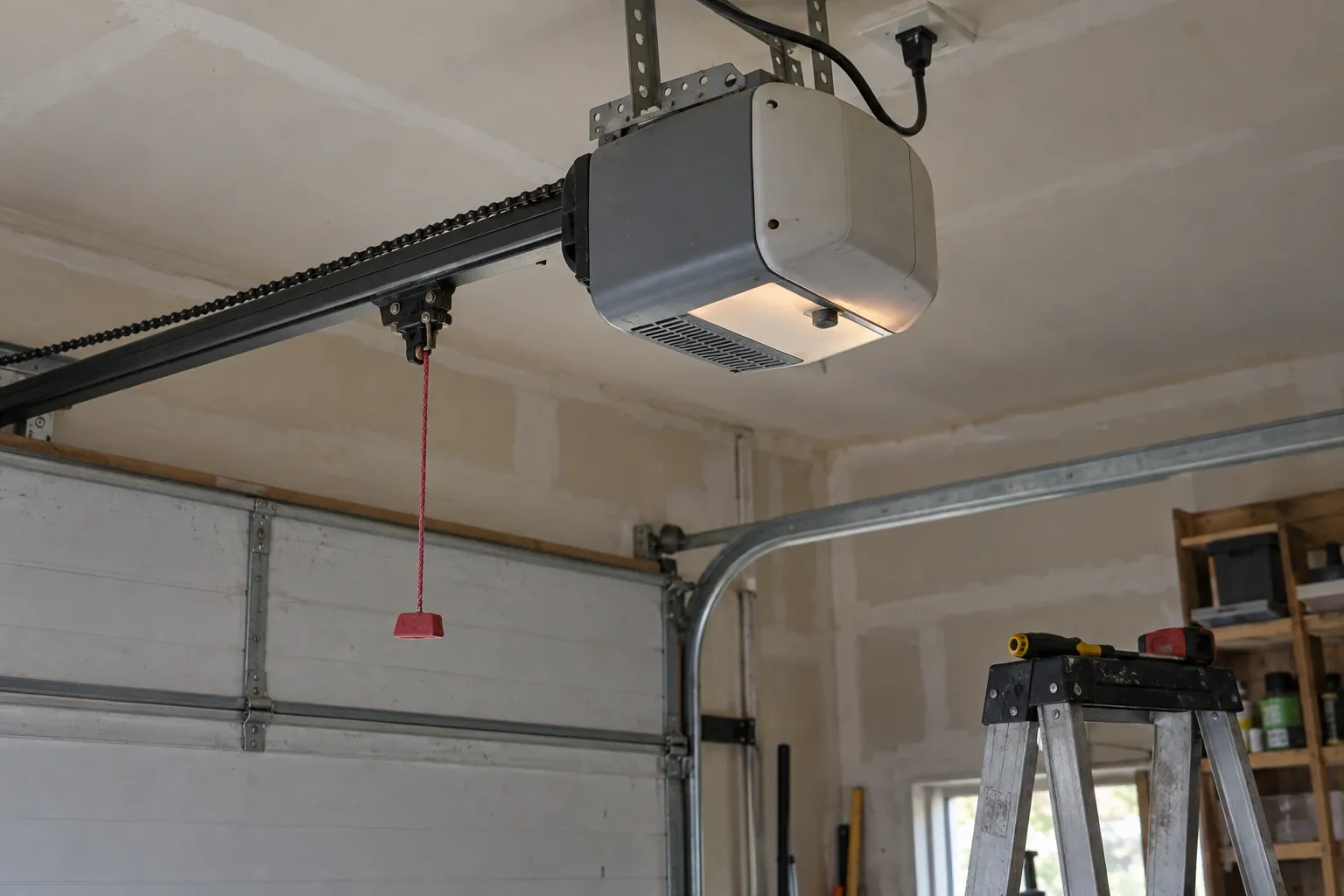
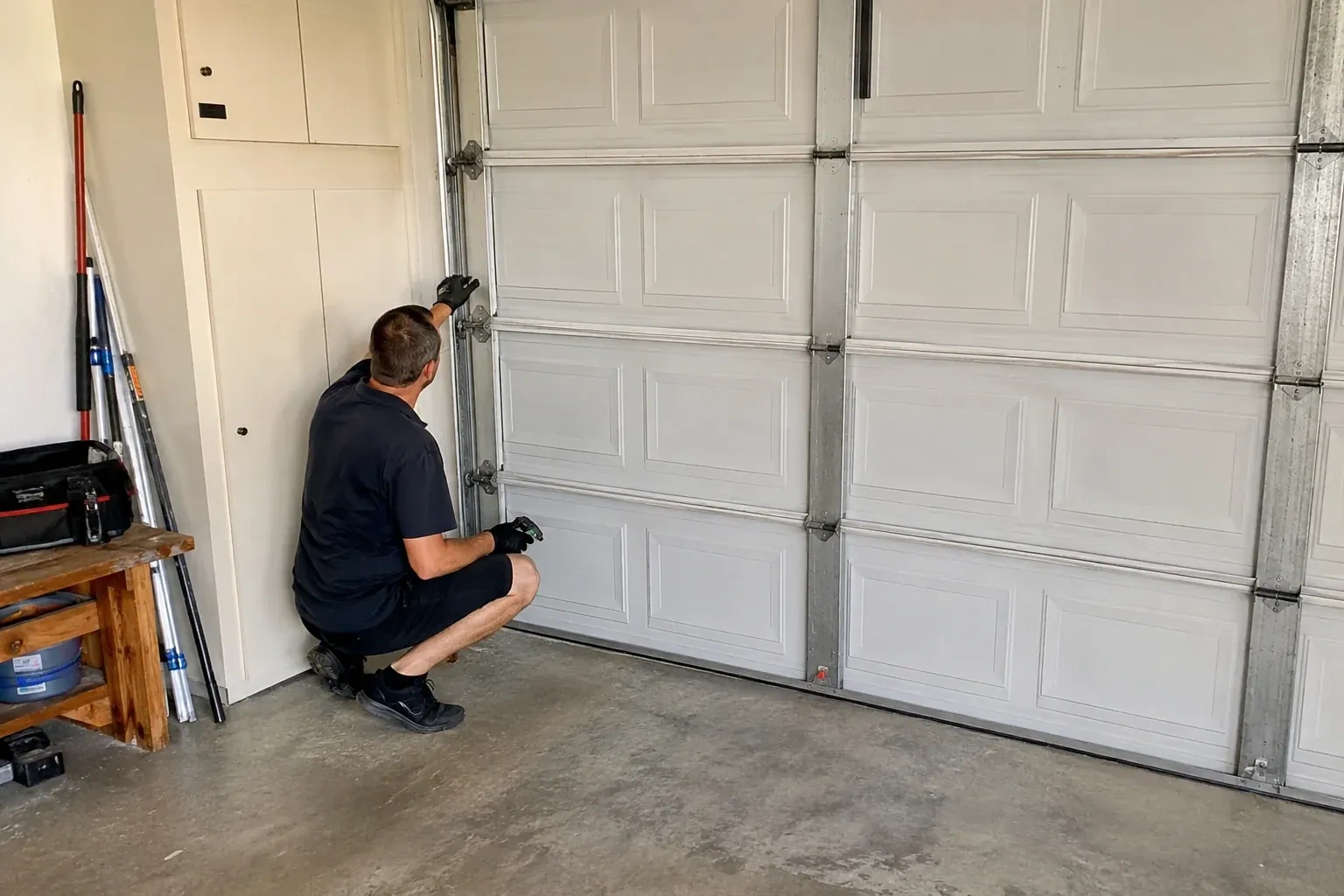
With the door closed, the opener is disconnected using the red release handle and the door is lifted by hand. A balanced door rises with modest effort, stays fully open and holds still about a metre off the floor. The springs are meant to carry nearly all the weight so the opener only guides the door. A heavy or sinking door means the opener is lifting weight it was not built to lift, wearing its gear and making the reversal system less reliable.
Our shop's overhead door was hit by a delivery vehicle. Is this the same service?
Yes, with the extra weight and size of a commercial door taken into account. The door is secured, the impact damage to sections, track and brackets is assessed, and the reset is paired with whatever track or hardware replacement the strike requires. Because the opening usually needs to be secured before the premises can close for the night, tell the technician when you call so the right track profile and rollers arrive with them.
How should I look after the door after the section is replaced?
A little routine goes a long way. Each month, look along the hinges for loose screws, spin the rollers, and check the door's balance by lifting it by hand with the opener disconnected. Twice a year, apply a light garage-door lubricant to hinge pivots, roller stems and springs, and keep the tracks clean and dry. Rinse salt off the lower sections in spring, touch up chips, and keep the bottom seal clear of ice in winter.
Is this something I can do myself?
Many homeowners do, and a technician's value lies in the parts that go wrong: identifying the exact profile so the seal seats, freeing a strip that has fused into its channel, spotting a retainer or door-level problem behind the gap, and resetting the opener's limit and force so the door lands gently and still reverses on an obstruction. If you would rather have it measured, fitted and tested in one go, that is what the visit is for.
Can I paint the new seal to match my trim?
Paint the rigid parts only. A wood stop can be painted before the fin is fitted or with the fin masked, and a vinyl stop needs no paint at all. The flexible fin is left bare, because paint fills it and stiffens it, and a stiff fin cracks well before its time once cold weather sets in. Seals come in a range of colours so the fin can match the trim without a brush.
Why should the opener never run with the manual lock engaged?
Because the opener is strong enough to lift a door heavier than a person, and it has no way of knowing a bar is in the track. It pulls, the bar bends, the lock body tears at its screws, the section can crease and the opener's gear or trolley takes the shock. Opener makers ask for manual locks to be disabled or removed when a motor is installed for exactly this reason.
How do worn rollers affect the opener?
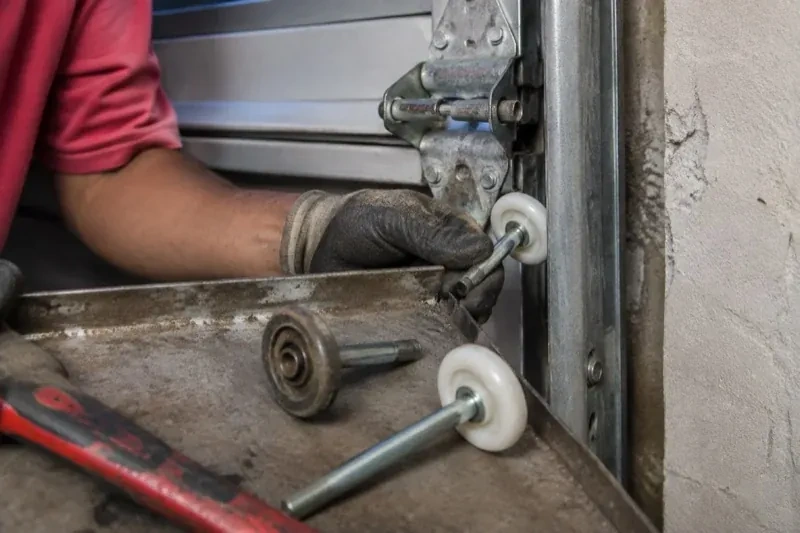
An opener is built to guide a balanced door, and every wheel that binds, wobbles or grinds adds resistance it has to overcome across the whole travel. It works harder, runs hotter, and may trip its force limit or reverse partway through a cycle. After roller replacement the technician confirms the door holds its own weight with the opener released, then checks the opener's force setting and its reversal on a test block, since a door that moves freely often needs those settings reduced.
Why do the lowest hinges rust before the others?
They live where the water is. Slush and road salt drip off the car onto the bottom two joints and pool along the floor, and the salt attacks the zinc coating where the hinge leaf meets the pin and around the screw heads. Higher hinges stay dry and often look new when the low ones are brown. Wiping the low hardware after a thaw and a light silicone film in autumn slow it down.
My door came off its track last month. Is this the same service?
It is the follow-on. Putting a door back on its track deals with the rollers and gets the door running again; track repair deals with the reason it left. If the reset showed a spread channel, a bent section or loose brackets, those are corrected now so the rollers stay put. Where nothing on the track was at fault and the cause was a cable or an obstruction, the track is simply checked and confirmed.
What stops the door from falling if a cable lets go?
It depends, and not reliably. The other cable and its spring may hold that corner so the door tips and wedges in the track rather than falling square, and the rollers binding can add some resistance, but neither is dependable: the door can still drop unexpectedly on the failed side. Some doors also carry a broken-cable device on the bottom bracket that grips the track if a cable fails. Because the door may not be held at all, the technician clamps and supports it before doing anything else.
What is the difference between galvanized and oil-tempered springs?
Oil-tempered springs are the traditional dark grey or black coil; they hold their tension well over time and are widely used. Galvanized springs have a zinc coating that resists rust, which is useful in damp garages, though they tend to relax slightly and may need a small adjustment after settling in. Both are available in standard and high-cycle ratings, and the technician can explain which suits your garage.
How do you know which springs my door needs?
By weight. Extension springs are rated for the weight they lift, so the technician releases the opener and weighs the door on a scale, then matches that figure and the door's height to a spring rating and stretch length. The old springs are measured as a check on wire size, coil diameter and length. Where the two disagree, the scale decides, since doors gain weight from added insulation or panels.
Why does my door drift upward when I let go of it?
Too much spring tension. The springs are pulling harder than the door weighs, so at rest they win and the door climbs. This often follows a spring replacement wound a turn too far, or a door that lost weight when heavy panels were swapped for lighter ones. Releasing a quarter turn or two, tested after each, brings it back to holding still.
How long does a diagnosis visit take?
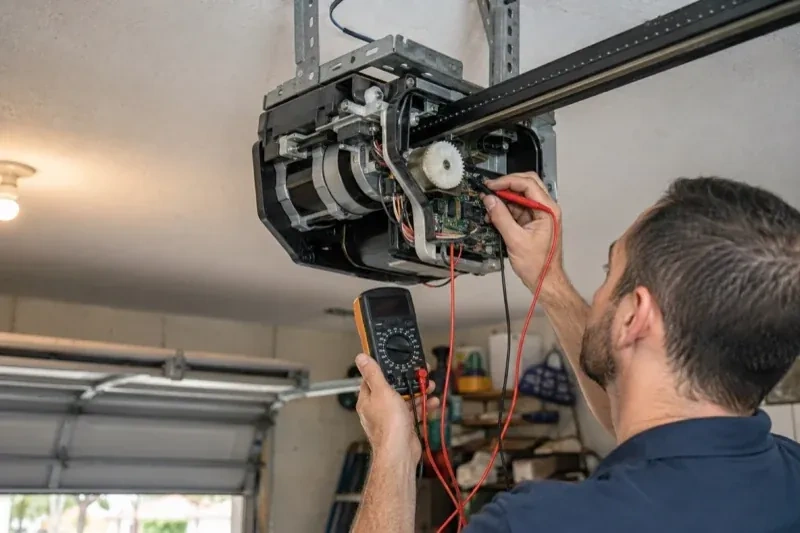
The checks themselves run in a set order and take a modest part of an hour on most doors. What extends a visit is the repair that follows: a gear kit or capacitor adds a little, a sensor re-wire or a trolley change adds more, and a door-side problem such as a balance fault may mean a second piece of work. You are told where things stand once the cause is found, before any further work begins.
Why is there white or grey dust on top of my opener?
Those are shavings from the plastic drive gear inside the head. The gear meshes with a steel worm on the motor shaft, and when it wears the teeth flake off and collect under the cover. Once you see shavings the gear is close to stripping, after which the motor runs and the door stays still. Replacing the gear and sprocket assembly before that happens turns a stranded morning into a planned repair.
The belt is fine in summer but stiff and noisy in winter. Why?
Rubber stiffens in cold, so a belt in a detached garage behaves differently at minus twenty than in July. Tension set on a warm day may run tight in deep cold, and a frozen bottom seal can make the operator reverse before the door has moved. The technician sets tension to the opener maker's specified measurement rather than the season, and puts a cold-rated lubricant on the door hardware.
Does a heavier door need a more powerful motor?
The door's springs carry its weight; the motor only guides it. A properly balanced door of any size moves with modest effort, which is why balance is tested first. That said, a large double door, an insulated steel door or a solid wood door is matched to a higher motor rating so the operator works well inside its range, and a top-section reinforcement bracket spreads the pull across a wide or flexible door.
Will my phone app or hub still work after the sensors are changed?
Yes. The sensors are wired to the head unit, and the app or hub simply talks to that unit, so nothing about the connection changes. What you will notice is the fault code clearing: apps that reported the sensors as obstructed or not aligned show the door as ready to close again. If an app or hub still holds an old code after the work, refreshing it or cycling the door from the app once clears it.
What is rolling code and why does it matter for programming?
Most openers made from the mid-1990s on change their code every time a remote is pressed, choosing from billions of possibilities, so a copied code is usually useless next time; the technician confirms the actual system from the model, not age. Programming matters because the opener has to learn each remote's sequence at the learn button; a remote cannot simply be set to match. Older fixed-code openers, set by small switches, can be upgraded with an add-on rolling-code receiver.
Does the controller need the photo-eye sensors to work?
For remote closing, yes. Controllers built to the operator standard check for a working sensor circuit before allowing a close from out of sight, and the door must stop and reverse if the beam is broken. Opening remotely and checking status generally work regardless. If your photo eyes are missing, dark or misaligned, they are put right as part of getting the door ready for the feature you actually want.
How do I keep the door in manual mode during a long outage?
On many rails, pull the cord straight down and then back toward the opener; the lever stays in the released position until you return it, so the trolley will not catch the door on its own. On others the trolley simply stays free until the opener is run. Lift and lower the door by its handle and use the slide bolt or manual lock to hold it shut. When power returns, reconnect first, then use the wall control.
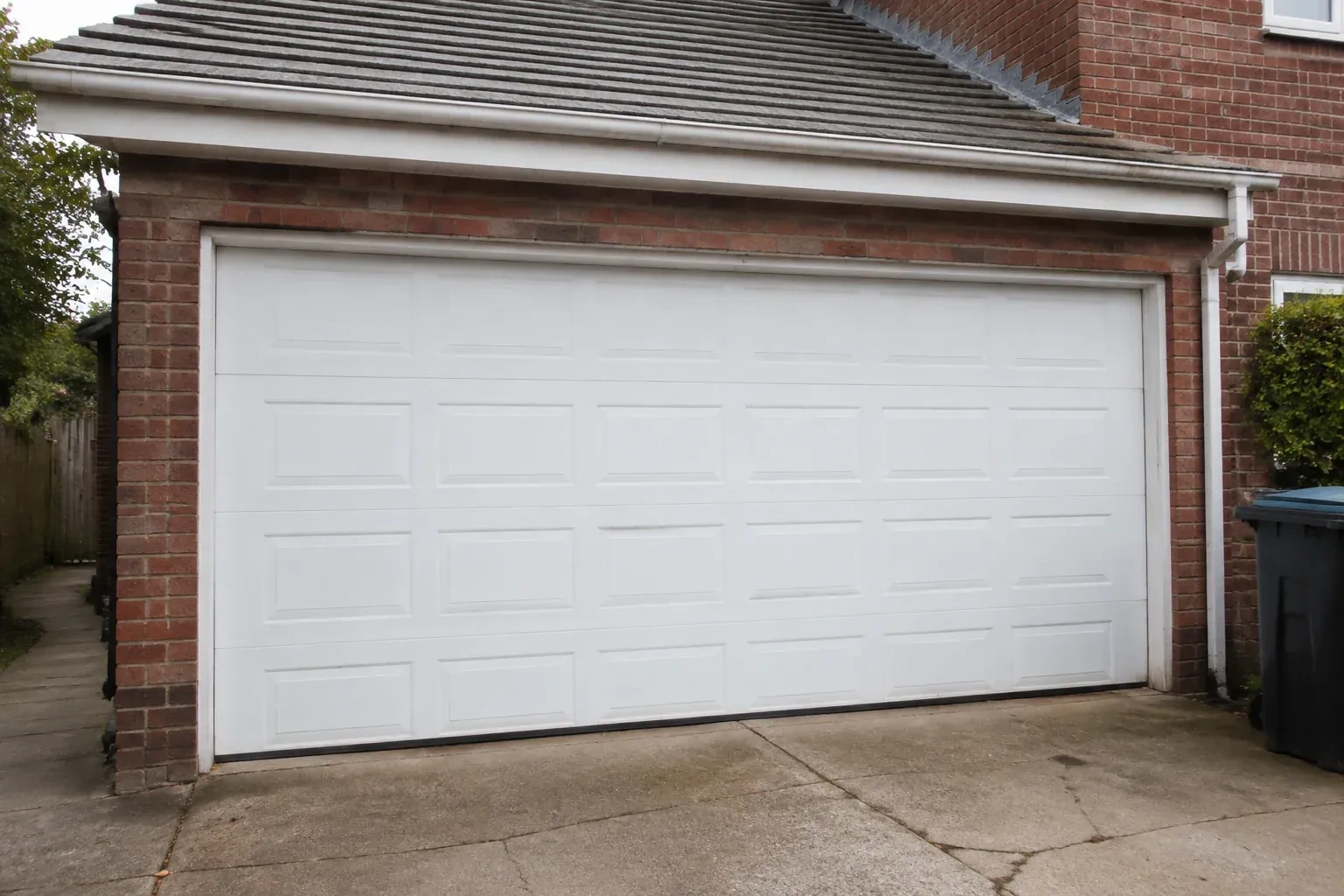
Can damaged framing be corrected during replacement?
Minor preparation may be included when it is clearly described, but deteriorated jambs, an unsound header or structural changes can require a separate trade and project decision. The assessment identifies fastening conditions before the door is ordered. That lets required carpentry or masonry work finish before new track and counterbalance brackets need secure attachment.
Should I choose one steel skin or two?
The choice depends on how the garage is used and how much interior durability matters. A door with interior and exterior steel faces encloses the insulation and provides a finished surface inside. Other constructions may suit spaces with lighter use. Compare section rigidity, insulation description, interior appearance, care needs and the manufacturer's documented performance for each complete product.
Can a wind-rated door be ordered in a custom width, or only in fixed standard sizes?
Manufacturers build wind-rated panels and reinforcement kits around a set of common opening widths, and most homes fall inside that range without any special order. An unusual opening, a converted carriage house or a hand-built garage, sometimes needs a custom width, which lengthens lead time and narrows the track and hardware options available. Measuring the opening early in the visit shows which category a particular door falls into.
Are the decorative handles and strap hinges functional?
On most sectional carriage designs, they are visual accents rather than working swing-door hinges. Their placement still requires care. They must attach where the section construction permits, align evenly across the face and clear trim and joints throughout travel. Some handles can also provide a suitable gripping point for manual movement when their product instructions identify that use.
How are glass sections protected during installation?
Sections stay in their protective packaging until they can be checked and staged safely. They are stored upright or on padded, non-marring supports as directed, with glass faces separated from tools and rough surfaces. Handling uses the frame and designated lift points instead of the panes or glazing beads, and protective film remains until the instructed stage of assembly.
Which documents should stay with the completed door system?
Keep the door and operator manuals, model or component identification, approved selections and any relevant drawings with the building records. The closeout note can include door size, track arrangement, counterbalance type, controls and completed commissioning checks. Private access codes remain with the owner rather than in a general service file. These records make future maintenance and compatible part identification much more straightforward.
Can corrosion on lower hardware be repaired?
Surface condition and remaining material determine the scope. Light contamination may be cleaned during maintenance, while pitted cables, weakened brackets, seized rollers or compromised fasteners are replaced with compatible components. The source of moisture is considered too. Clearing drainage, renewing seals and removing accumulated salt help protect the repaired lower section and its hardware.
What gets tested before the door returns to use?
Testing follows the repaired system and can include full travel, curtain tracking, bottom-bar level, open and closed limits, manual effort, brake action, controls, locks, interlocks and protective-device response. Several controlled cycles help reveal repeated contact or noise. The completed record names the checks performed instead of relying on a general statement that the door operates.
Can a high-lift conversion create room for a vehicle lift?
That is a common reason to consider one. The assessment uses the lift's raised height, the vehicle profile and working clearance to define the needed zone. The proposed door path is then measured against that zone, including the lowest section in the open position. Final feasibility depends on available wall height, ceiling conditions, structure and equipment placement.