Repairs · Newmarket
Garage Door Manual Lock Repair
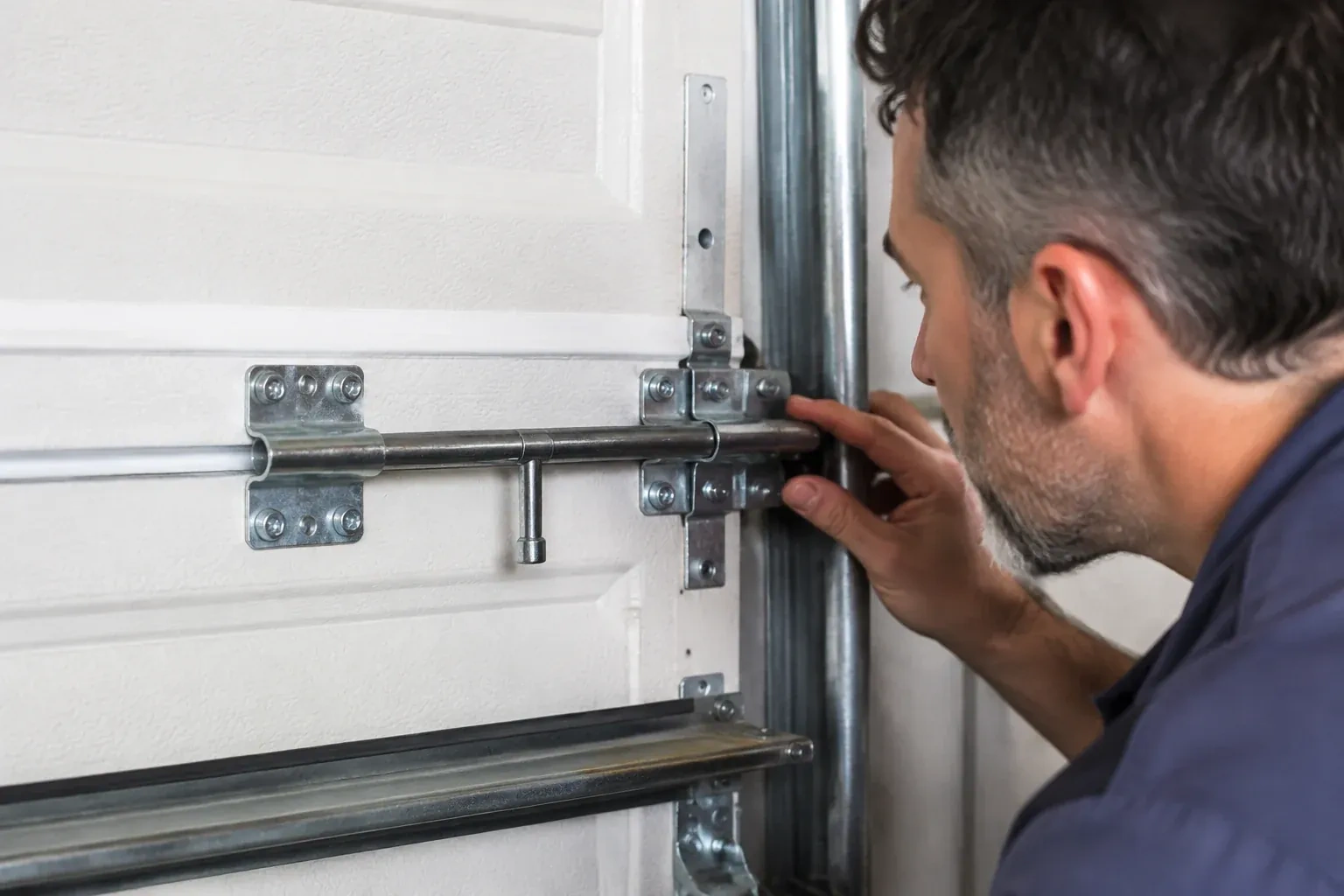
On the old wooden door out back, one lock bar hangs loose from a rusted guide and the other is bent at an angle, so the handle turns but the door can still be lifted a hand's width from outside.
In plain words
A manual lock earns its keep on the nights the power goes out. With the opener dead, the door comes down by hand on the release cord, and the slide bolt or T-handle is what holds it shut until morning. Winter tests these locks: meltwater freezes in the outside cylinder, salt spray stiffens the bars in their guides, and packed snow under the door lifts it just enough that the bolt misses its slot. Lock repair puts the mechanism right, treats the cylinder and bars so they shed moisture, and leaves you with a simple routine for outage nights.
How the visit goesThe outside handle wobbles in your hand and the inside knob spins round and round with nothing attached. The screws that held the lock through the door skin have pulled loose, leaving oval holes, and the whole thing hangs on by little more than paint.
Garage Door Manual Lock Repair
How the visit goes
What the household wants the lock for
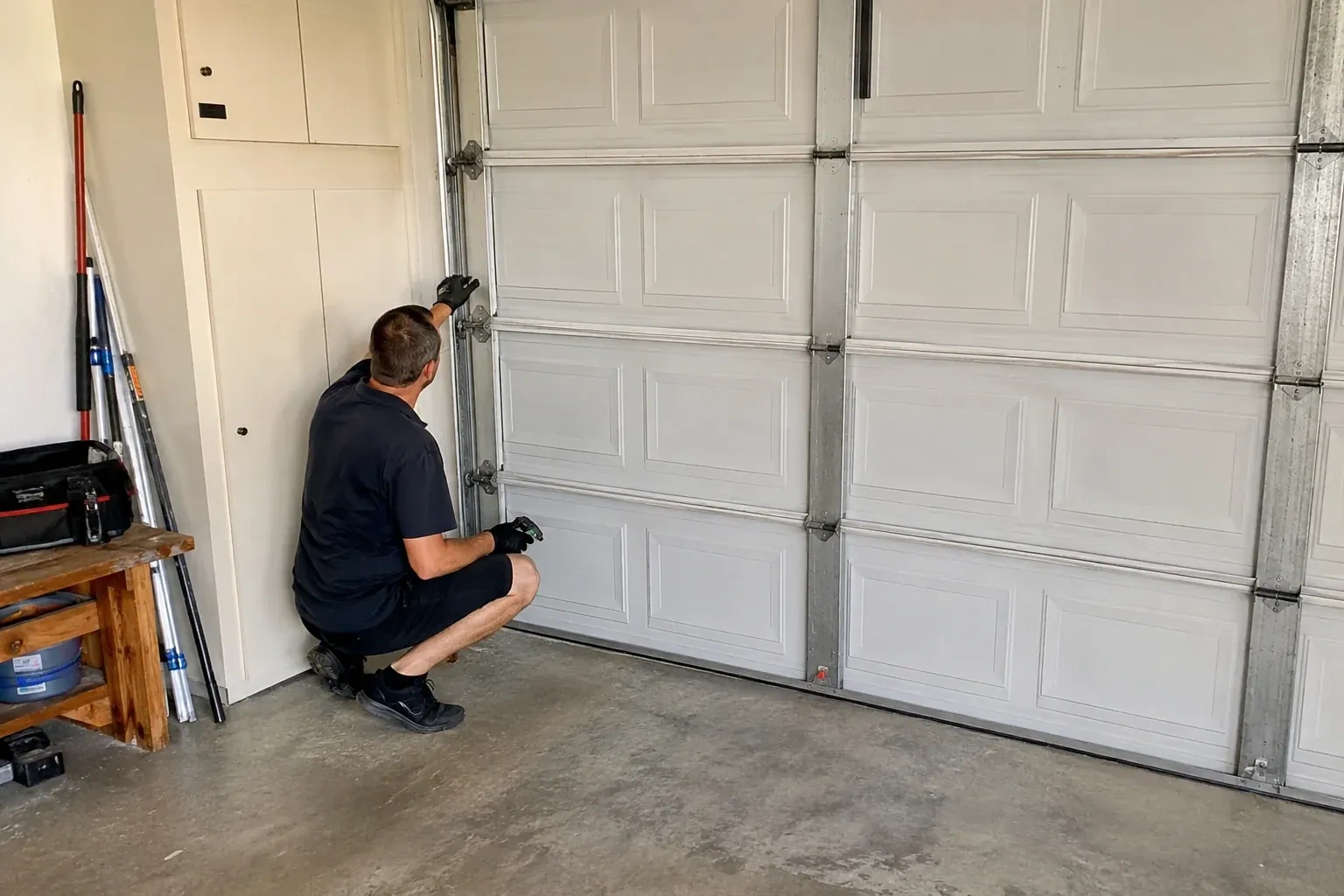
The last part of the first look is a conversation. Some people want a lock that is used every night; others want it only for power outages and holidays; others want a keyed handle they can open from the driveway when the remote is in the other car. Some want the garage keyed to the house key, and some want the lock gone and the opener's own lock-out used instead. Where a locked door has to be opened without a key, the technician also confirms the caller's connection to the property, a courtesy every neighbour benefits from. Knowing the intended use shapes which parts are fitted, how many keys are cut and what the handover covers.
Anchoring the lock in tired material
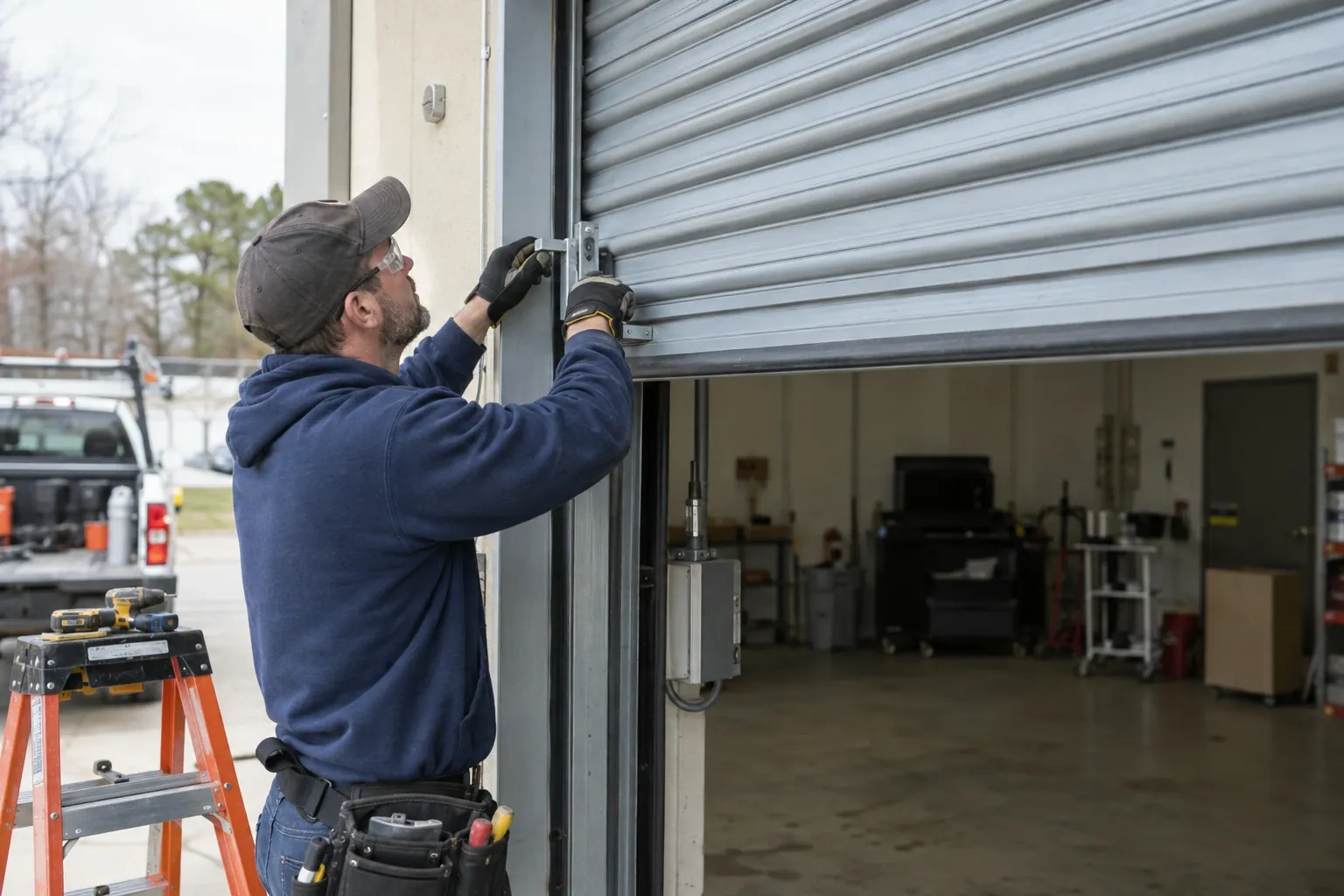
A lock is only as sound as what it is screwed to. Where screws have pulled through a thin steel skin and left oval holes, the technician fits carriage bolts through the section with a backing plate on the inside, spreading the load across a wide patch of metal. On a wooden door with softness around the handle or along the stile, the decayed wood is cut back and a hardwood filler block or backing plate is let in, and the lock and guides are fixed to that. Holes that have grown are plugged and redrilled. The result is a handle that turns without rocking and guides that hold the bar where it was set.
Getting the cylinder and bars through winter
The outside cylinder sits on a cold steel face where meltwater runs, so it gets a dry graphite or PTFE lubricant rather than oil, which would trap moisture and grit. A puff at the start of the cold season and another after the first thaw keeps the pins moving. A small tube of lock de-icer in the car is the answer to a keyway that has frozen; hot water is never poured on it. The bars and their guides, which live where salt spray collects, take a light silicone film in late autumn. Keep the threshold clear of packed snow so the door closes to its full depth and the bolt still finds its slot.
Garage Door Manual Lock Repair
In the van
Lock bar guides
Keyed T-handle lock set
Track lock-slot punch
Carriage bolts and backing plates
Lock cylinder with tailpiece
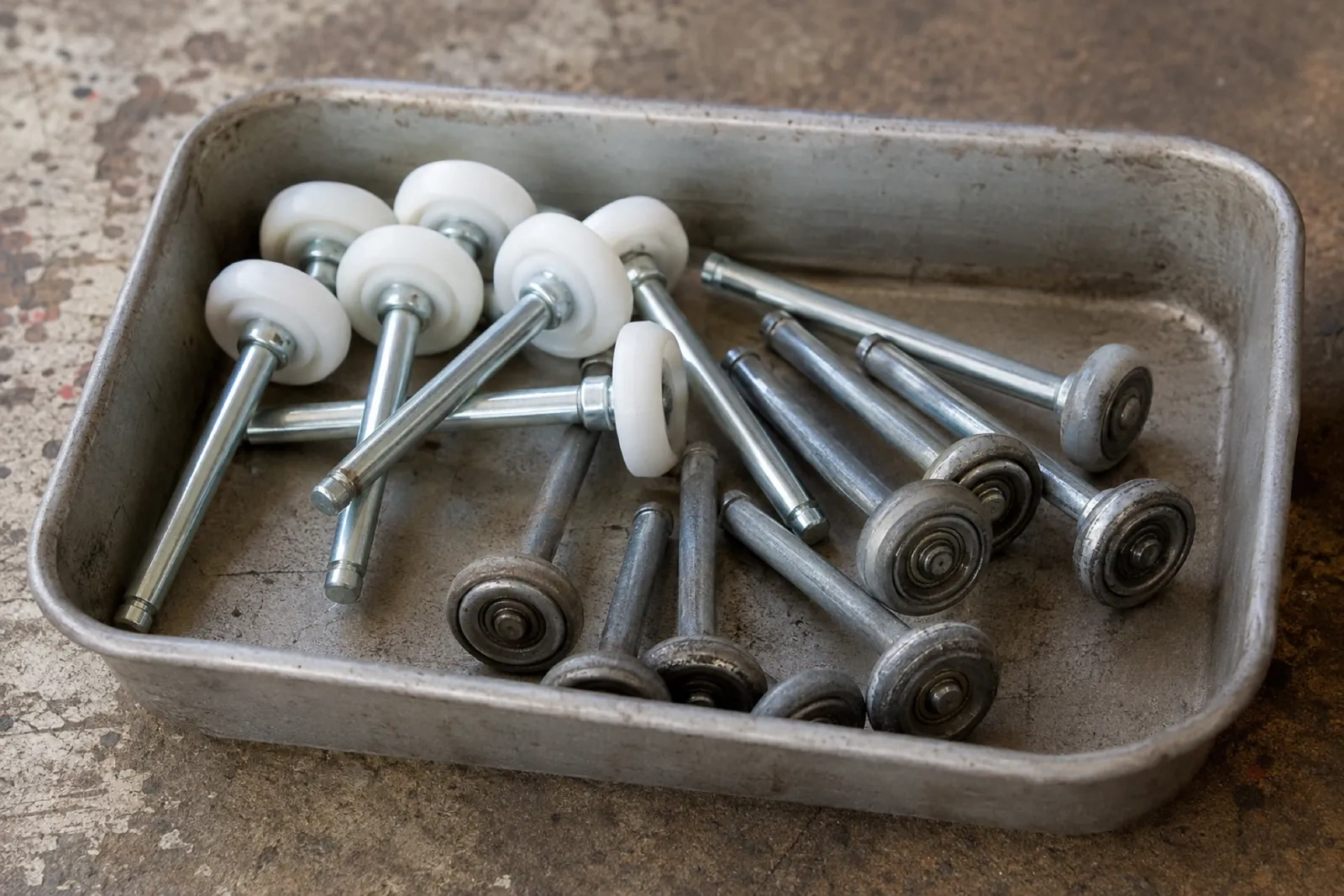
Garage Door Manual Lock Repair
What affects the quote
Age and pattern of the lock
Older handles and mechanisms may need a matching-pattern replacement so the existing cutout and bars line up. Sourcing or adapting parts for an uncommon lock shows in the quote.
Slide bolt or keyed handle
An inside slide bolt is a simple piece of hardware with one moving part. A keyed T-handle has a cylinder, spindle, centre body, springs and two bars, and its repair takes more time and more parts.
Steel skin or wood
Thin steel that has let the screws pull, or wood gone soft around the handle, calls for carriage bolts, backing plates or a filler block. That reinforcement is its own line in the quote.
What to have ready
- Is the lock a sliding bar inside, a T-shaped handle outside with a key, or both?
- Do you want to be able to lock the door by hand during a power outage?
- Is the door steel, wood or aluminum, and roughly how old is it?
Garage Door Manual Lock Repair: questions
QuestionsWhy should the opener never run with the manual lock engaged?
Because the opener is strong enough to lift a door heavier than a person, and it has no way of knowing a bar is in the track. It pulls, the bar bends, the lock body tears at its screws, the section can crease and the opener's gear or trolley takes the shock. Opener makers ask for manual locks to be disabled or removed when a motor is installed for exactly this reason.
Do I need a manual lock at all if I have an opener?
Many households do without one. With the trolley engaged, an opener holds the door shut, and most wall consoles include a lock-out button that disables every remote while you are away. A manual lock earns its place for power outages, for a detached garage without an opener, and for anyone who likes a physical bar in the track. The technician can set the door up either way.
The handle turns but the bars stay put. What has broken?
Something in the short chain between the handle and the bars. The square spindle may have twisted or sheared, the set screw holding the inside knob may have let it spin free, the cam inside the centre body may have worn round, or the return spring may have snapped. The inside cover comes off to see which, and the failed part or the whole mechanism is replaced to suit.
Related services
- Garage Door Tune-UpThe door lands with a thud you can feel through the kitchen floor, and sometimes it bounces back up a few centimetres before settling.
- Off-Track Garage Door ResetThe rollers on the door have been squealing for months.
- Garage Door Panel ReplacementAfter an overnight freeze the door stuck to the slab, the opener strained, and something gave.