Repairs · Newmarket
Garage Door Tune-Up
The door lands with a thud you can feel through the kitchen floor, and sometimes it bounces back up a few centimetres before settling.
In plain words
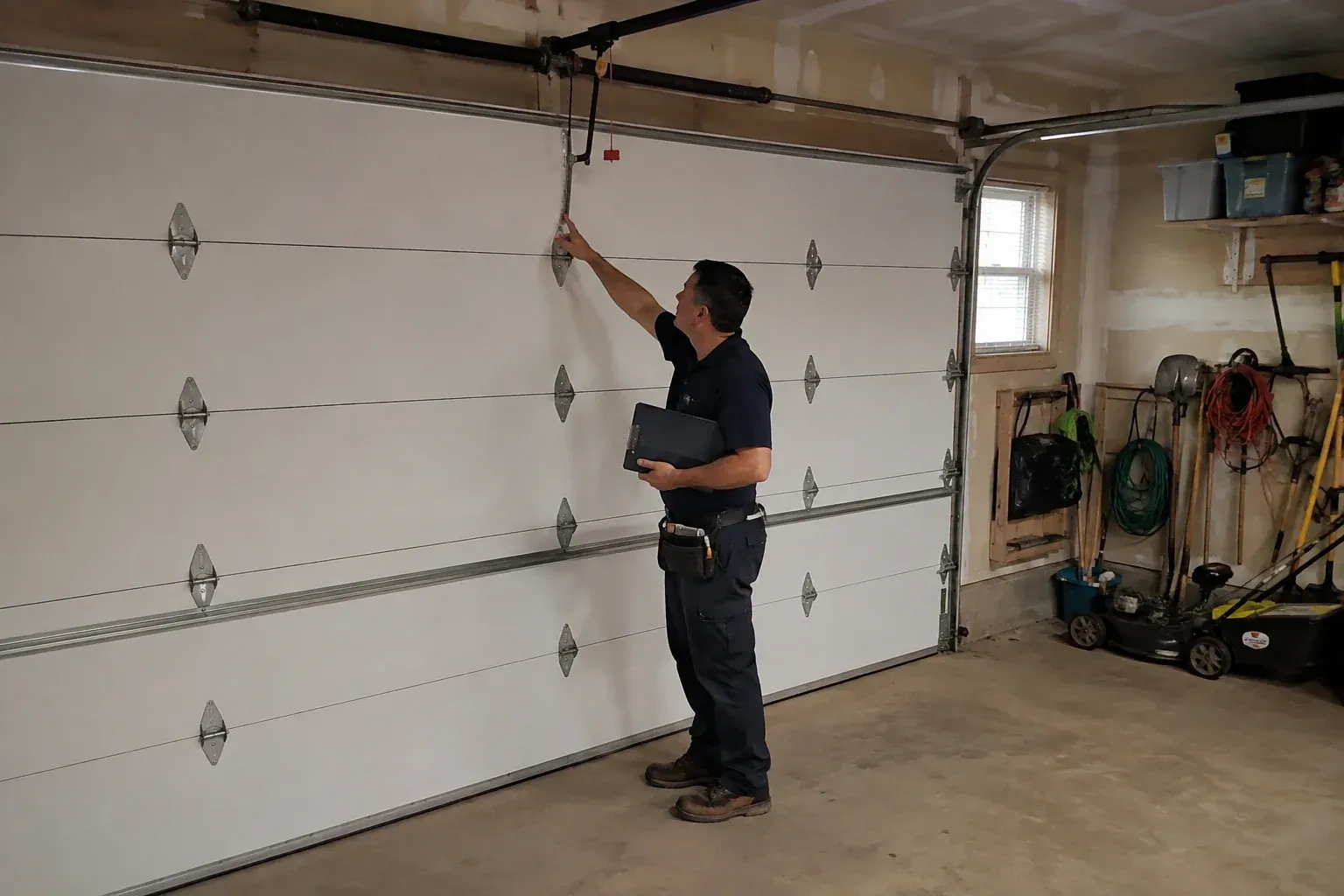
The heart of a tune-up is the balance check. Your springs are meant to carry nearly the whole weight of the door so the opener only has to guide it. When the door is disconnected from the opener and lifted by hand, it should rise without effort, stay open on its own and hold still partway. A door that sinks or feels heavy is telling you the springs have lost tension, and an opener made to move a balanced door is straining. The tune-up identifies this and treats spring adjustment as its own carefully done job, with the door clamped and proper winding bars.
How the visit goesHalfway up, the door shudders. The sections seem to catch for a moment, the whole assembly shakes, then it carries on as if nothing happened. You have started holding your breath at that spot each time.
Garage Door Tune-Up
How the visit goes
Feeling the balance by hand
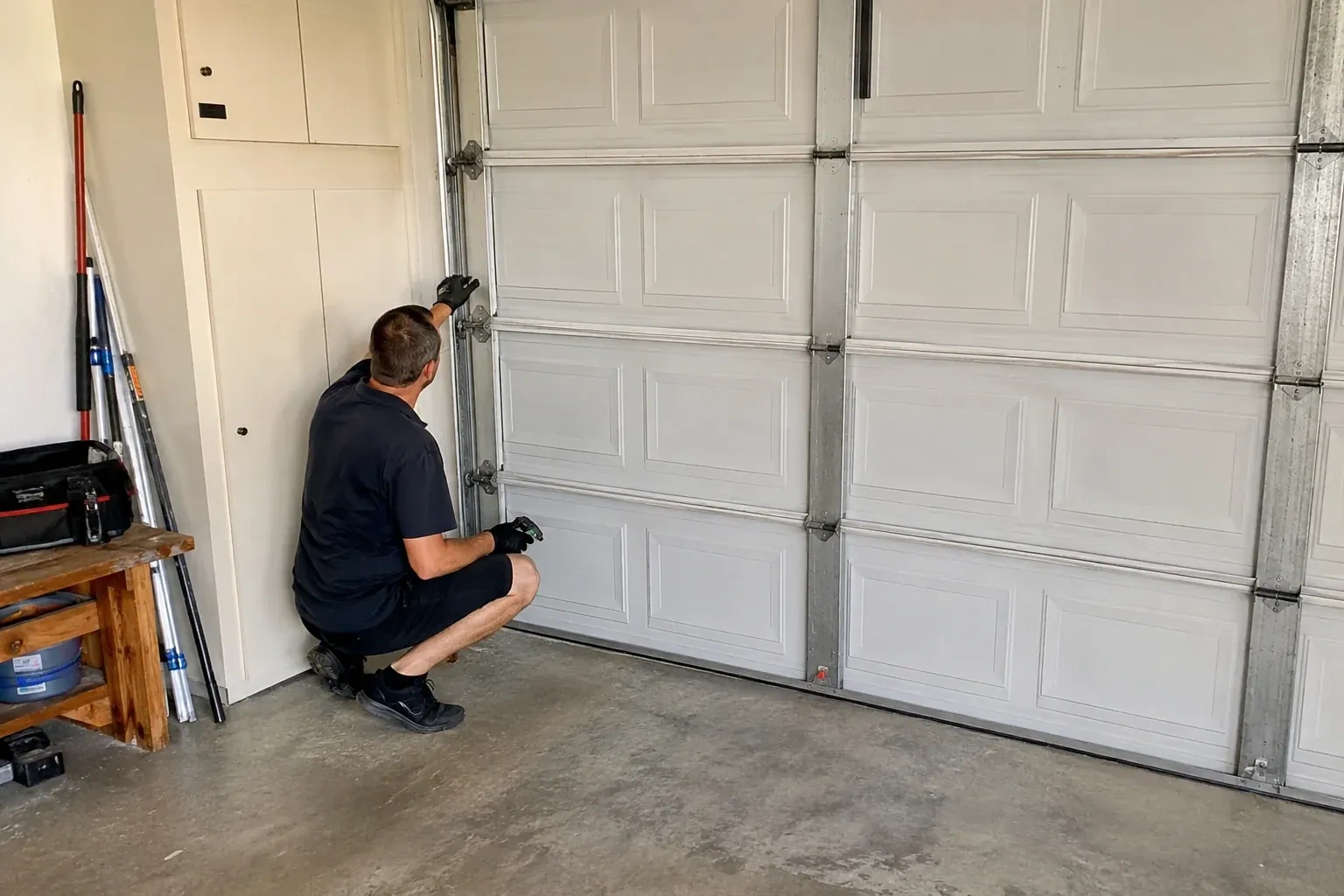
The door is disconnected from the opener with the red release handle, and the technician lifts it by hand, gripping only the handles or a safe edge. A properly balanced door rises with modest effort, stays fully open on its own and holds still when left about a metre off the floor. A door that sinks back down, or that takes real strength to raise, has springs that have lost tension and an opener that has been carrying weight it was not designed for. This check takes a minute and decides more than any other: it tells the technician whether the tune-up can proceed as maintenance or whether spring work needs to be quoted first.
Seals and the threshold
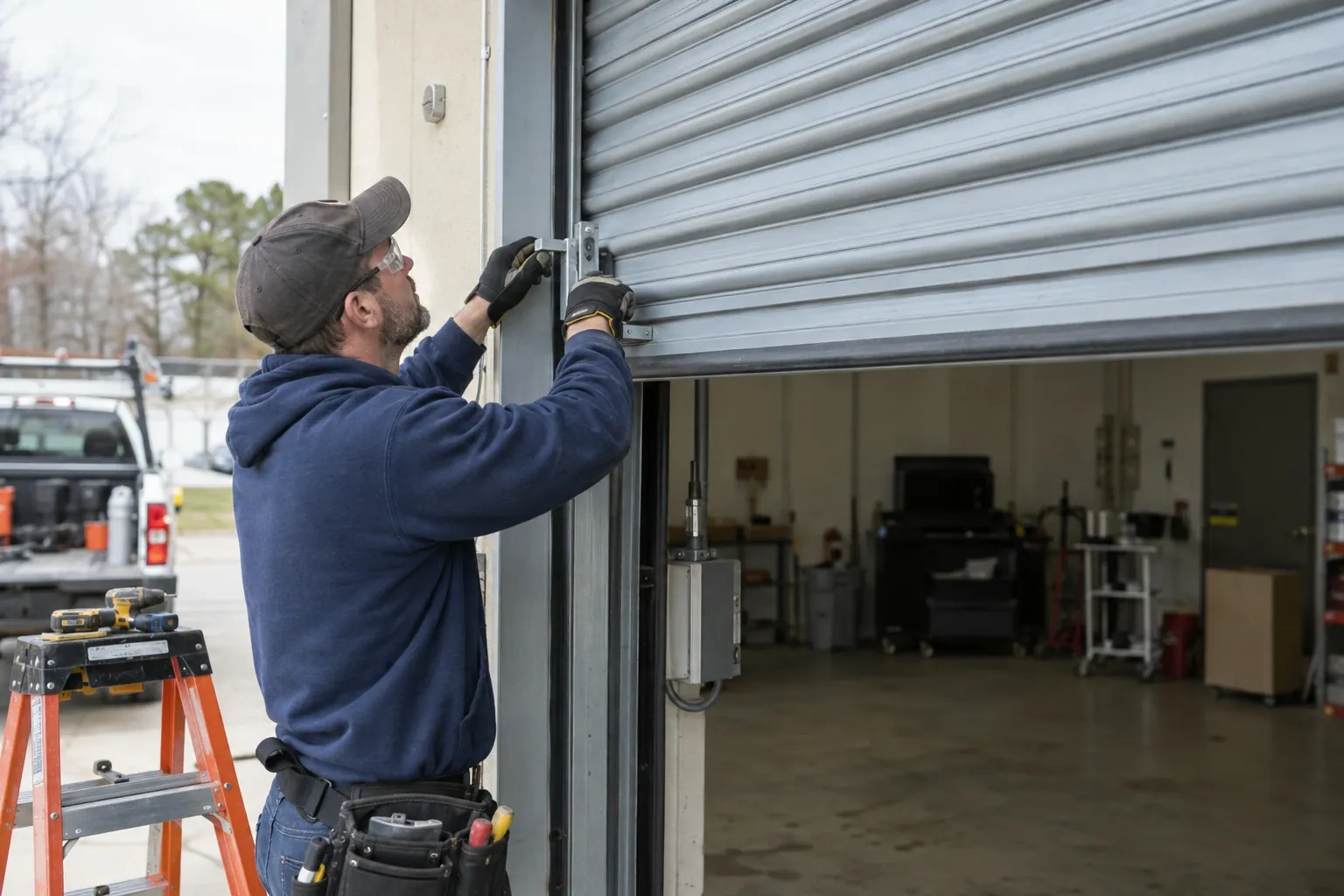
Rubber and vinyl get a silicone spray, never a petroleum product, which attacks the material. A bottom seal that is torn or has flattened can be replaced in the same visit if stock is on hand: the old length is drawn out of the retainer, the retainer is cleaned, and the new astragal is fed in and trimmed to width. Jamb and header weatherstrip that has gone hard or split is renewed so the door closes against a flexible edge and stops rattling in wind. Where the threshold holds water, the technician points out the low spot and suggests keeping it clear of ice, since a seal frozen to the slab is the usual winter casualty.
Knowing what to listen for next
Part of the handover is a short lesson in the door's language, so the next change registers. A squeak returning means the hinge pins want lubricant. A new rattle at the top of travel means a screw is loosening and is worth a look. A door that starts to sink when lifted by hand is springs losing tension. A loud bang from the garage with the door then feeling very heavy is a broken spring, and the door stays closed until it is replaced. A door that reverses on its own with no obstruction is a sensor or force issue. With these signs in mind you can describe a problem precisely and decide whether it needs a call.
Garage Door Tune-Up
In the van
Photo-eye brackets and wire
Bottom seal (astragal)
Silicone spray for seals
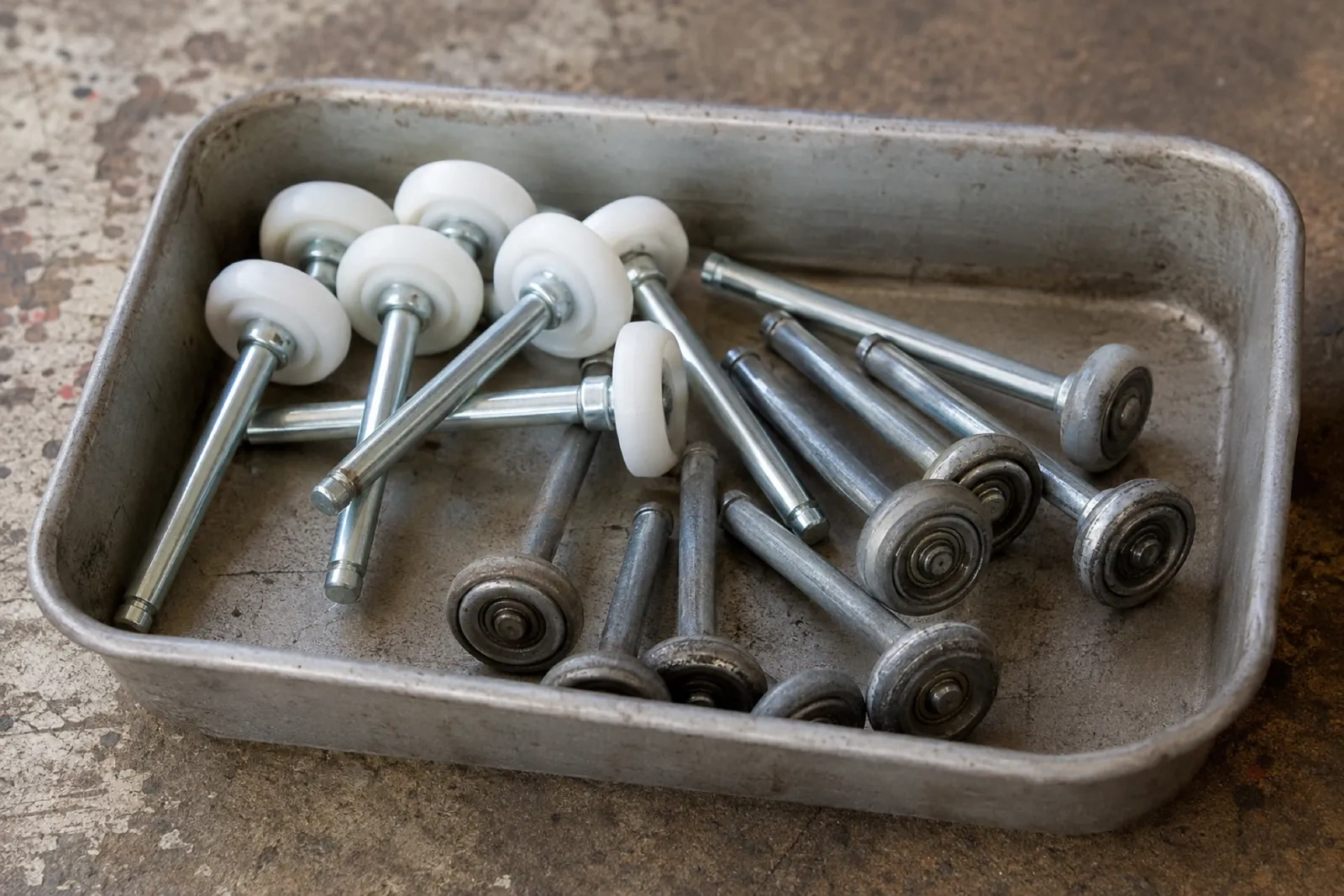
Replacement steel or nylon rollers
Silicone or lithium garage door lubricant
Garage Door Tune-Up
What affects the quote
Track alignment
Tightening track bolts is included. A track that has been pulled out of line or dented by a vehicle needs straightening or a section replaced, and that is quoted as its own repair.
Written record and follow-up
A basic handover note is part of every visit. A detailed condition report with photographs for a landlord, a strata or a home sale is available as an added item.
Season and weather
A winter visit can include freeing a seal frozen to the slab and working with thickened lubricant before the tune-up proper can begin, which adds time to the visit.
What to have ready
- What have you noticed: noise, shaking, hesitation, slamming, or reversing on its own?
- What brand is the opener, and is it a chain, belt, screw or wall-mounted unit?
- Do both sensor lights near the floor glow steady, or does one blink?
Garage Door Tune-Up: questions
QuestionsWhat is the balance test and why does it matter so much?
With the door closed, the opener is disconnected using the red release handle and the door is lifted by hand. A balanced door rises with modest effort, stays fully open and holds still about a metre off the floor. The springs are meant to carry nearly all the weight so the opener only guides the door. A heavy or sinking door means the opener is lifting weight it was not built to lift, wearing its gear and making the reversal system less reliable.
Will the tune-up include replacing worn parts?
Small wear items found on the day, such as a roller or a hinge on a middle section, a bottom seal or a few fasteners, can often be replaced during the visit if you agree and the part is on the truck. Larger items, including springs, cables, drums, bottom brackets, a bent track or an opener gear, are written up as separate repairs with their own quote so you can decide with the facts in hand rather than under a raised ladder.
Which lubricant is right for a garage door?
A silicone-based or white lithium garage door lubricant, sold for the purpose. Penetrating oils and general sprays are thin, attract dust and are gone in weeks; heavy grease traps grit. For the rubber bottom seal and weatherstrip, use only a silicone spray, since petroleum products attack rubber and make it brittle. Nylon rollers with sealed bearings need no lubricant, while ones with an exposed bearing can need a touch where their own maker calls for it. A small amount on each point, worked in by moving the door, is enough.
Related services
- Off-Track Garage Door ResetThe rollers on the door have been squealing for months.
- Garage Door Panel ReplacementAfter an overnight freeze the door stuck to the slab, the opener strained, and something gave.
- Garage Door Bottom Seal ReplacementThe gap under the door is a finger wide at one end and nothing at the other.