Springs · Newmarket
Garage Door Hinge Replacement
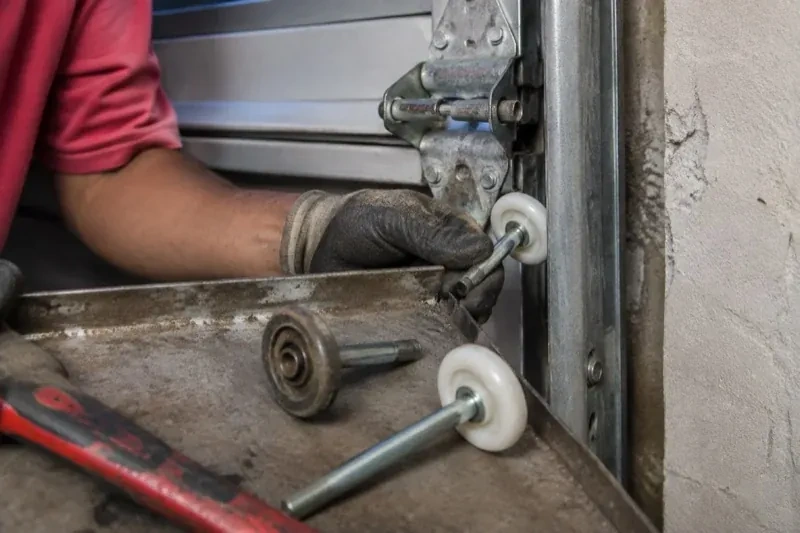
The roller at the top of the second panel is leaning outward and only half of the wheel is still in the track.
In plain words
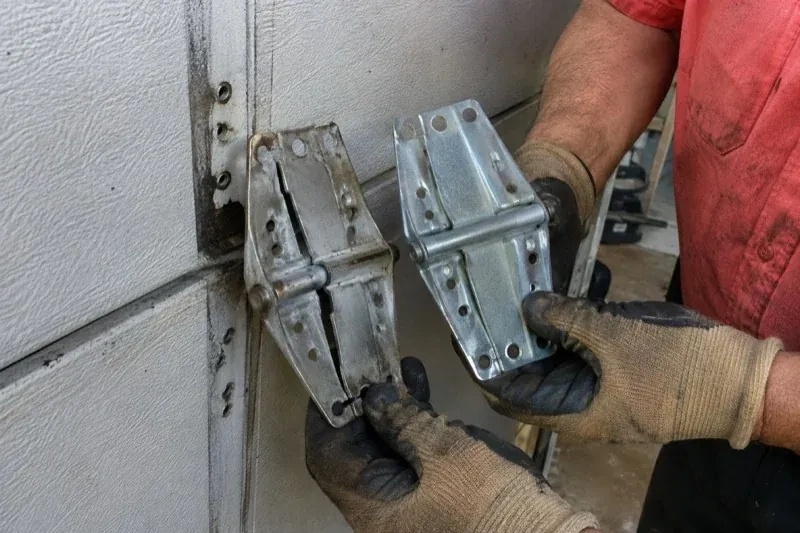
Not every hinge on the door is the same part. The edge hinges are numbered: 1 at the joint above the bottom panel, then 2, 3 and sometimes 4 or 5 going up. Each number stands the roller a little further off the door face, which is what lets the door lean snugly against the jambs when closed even though the tracks angle away from it. Centre hinges carry no roller and share the geometry of a 1. Reading the stamped number on the old hinge, or counting the joint from the floor, is how the replacement is chosen so the door keeps sealing evenly along both sides.
How the visit goesThe roller at the top of the second panel is leaning outward and only half of the wheel is still in the track. Behind it, the hinge that should hold it flat against the door has a screw missing and another hanging by a thread.
Garage Door Hinge Replacement
How the visit goes
Reading the number on each edge hinge
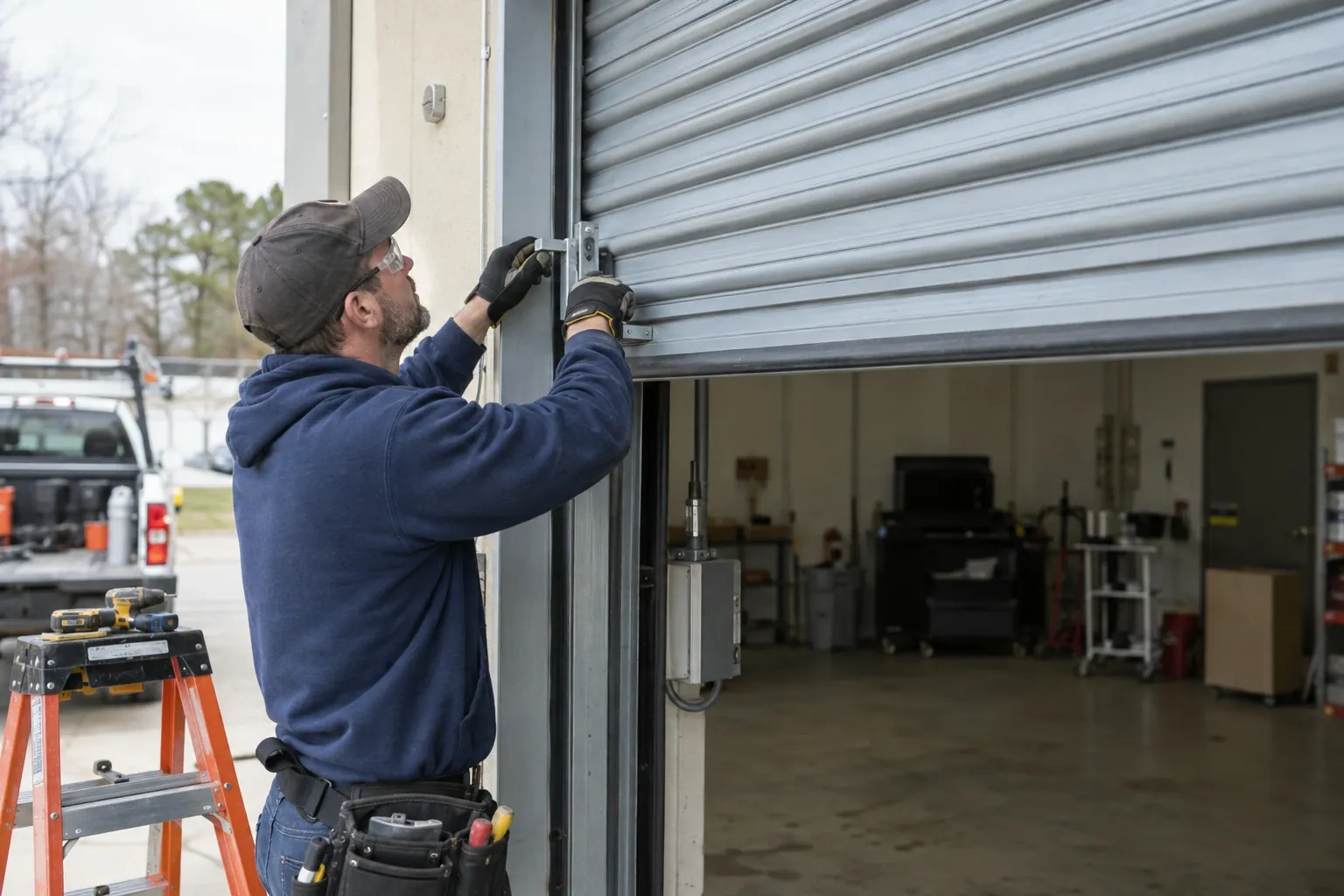
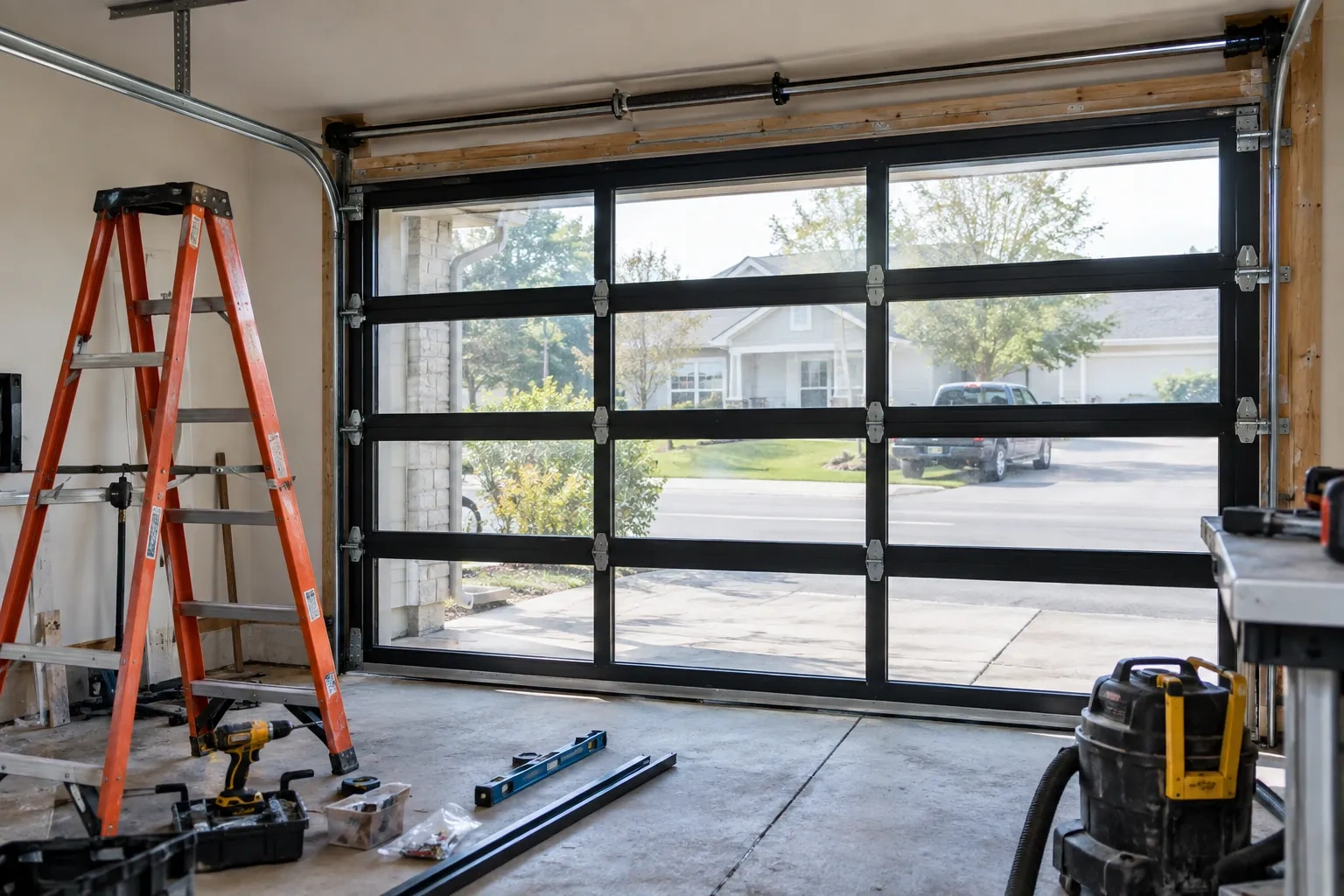
Every edge hinge carries a stamped number, and the technician reads it rather than assuming. A 1 sits at the joint above the bottom panel, a 2 at the next joint up, then 3, with 4 and 5 appearing on taller doors. The number sets how far the roller stands off the door, so the door leans into the jambs when closed and follows the track as it climbs. An earlier repair sometimes leaves a 2 where a 3 belongs, and that door binds or gaps at the curve for years without anyone knowing why. Confirming the number on each joint, and correcting any that are wrong, is part of the first look.
The right number, gauge and pattern
Every replacement hinge is matched three ways. The number matches the joint, read from the old hinge or counted from the floor, so the roller sits at the correct offset. The gauge matches or improves on the original: 18 for a light door, 14 for the heavier residential standard, and thicker still where a heavy insulated door or heavy use calls for it. The width and hole pattern match the stile, since a hinge from one maker may not line up with another's panels. Where the door has a mix of numbers from earlier repairs, the technician corrects them so all edge hinges follow the proper sequence.
Learning the door's new sound
A well-hinged door has a sound, a steady rumble with no clicks, and it is worth getting to know it. A new pop or click at a fixed height points at a hinge or roller at that joint. A grinding note from one end suggests a roller bearing. A rattle when the door settles onto the floor is often a loose centre hinge screw. Because you now know what the door sounds like when everything is tight, a change stands out early, while it is a screw or a single hinge rather than a bent panel. A phone recording of the healthy door is a handy reference.
Garage Door Hinge Replacement
In the van
Track clamps or locking pliers
Carriage bolts, nuts and washers
Hinge support plates
Numbered galvanized edge hinges
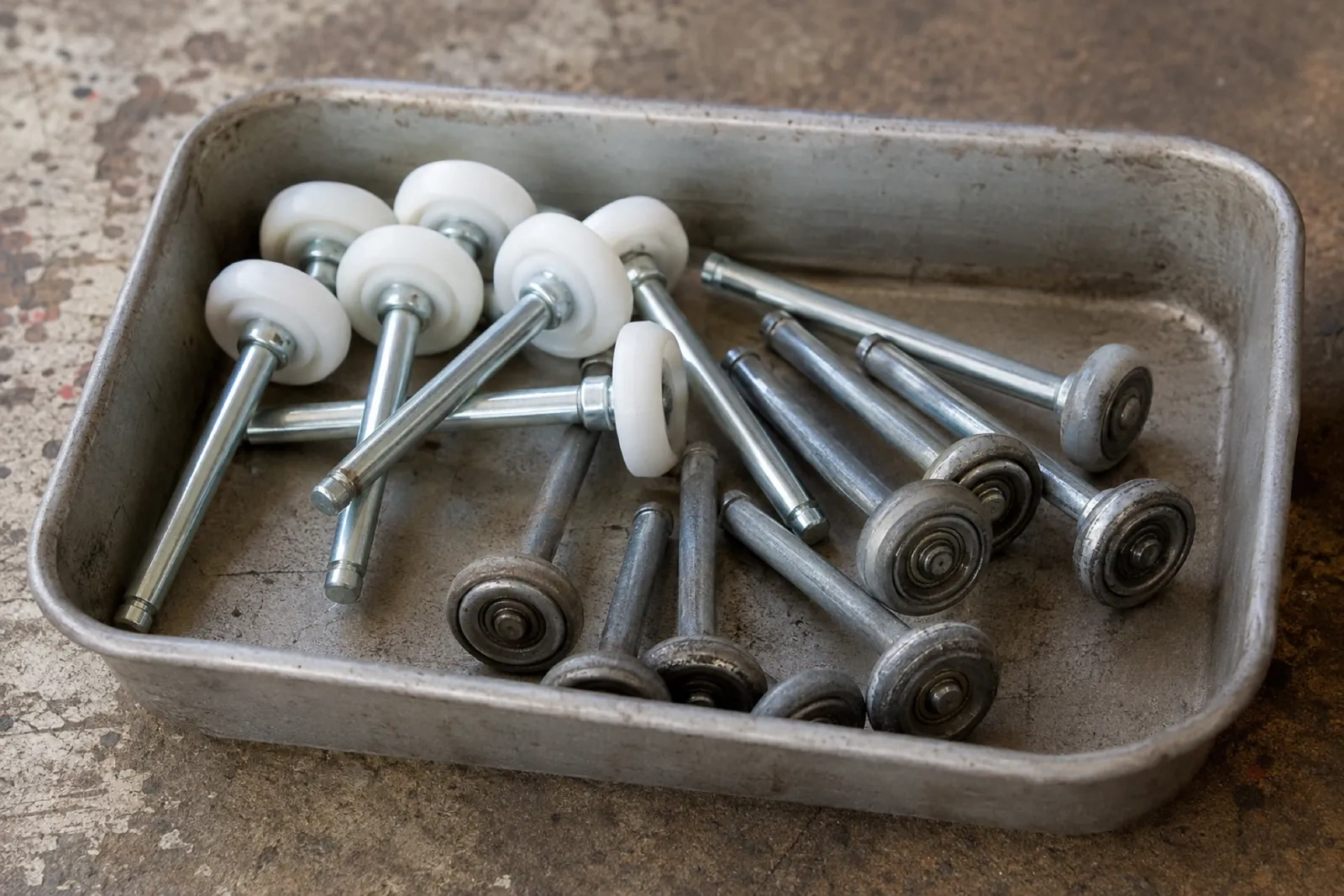
Replacement rollers
Garage Door Hinge Replacement
What affects the quote
Corrosion and seized fasteners
Screws rusted solid take time to drill out, and heavily corroded hinges on the lower joints are replaced rather than reused, which shows in the parts list.
Adding a strut to a wide door
A wide panel without a strut flexes and loosens its hinges. Fitting one is an optional item that stiffens the panel and protects the new hinges from the same movement.
Track or balance problems found
If the inspection shows a track out of line or a door out of balance behind the hinge failure, correcting it is explained and priced on its own alongside the hinge work.
What to have ready
- Is a roller leaning or partly out of the track anywhere?
- Do any screws turn without tightening when you press a hinge?
- Is the loose or broken hinge at the edge of the door or in the middle?
Garage Door Hinge Replacement: questions
QuestionsWhy do the lowest hinges rust before the others?
They live where the water is. Slush and road salt drip off the car onto the bottom two joints and pool along the floor, and the salt attacks the zinc coating where the hinge leaf meets the pin and around the screw heads. Higher hinges stay dry and often look new when the low ones are brown. Wiping the low hardware after a thaw and a light silicone film in autumn slow it down.
How many hinges does a typical door have?
Count the joints between panels and multiply. A single door usually carries two edge hinges and one centre hinge per joint, so a four-panel door has three joints and nine hinges. A double door adds one or two more centre hinges per joint to keep the wider panels flat. The top panel uses adjustable top fixtures rather than hinges, and the bottom corners use bottom brackets, which are different parts.
What is the difference between an edge hinge and a centre hinge?
An edge hinge sits at the end of the joint on the end stile and does two jobs: it links the panels and it holds the roller that runs in the track, which is why it is numbered for its position. A centre hinge sits on an intermediate stile in the middle of the door, links the panels only, and carries no roller. Both let the panels pivot as the door folds around the curve.
Related services
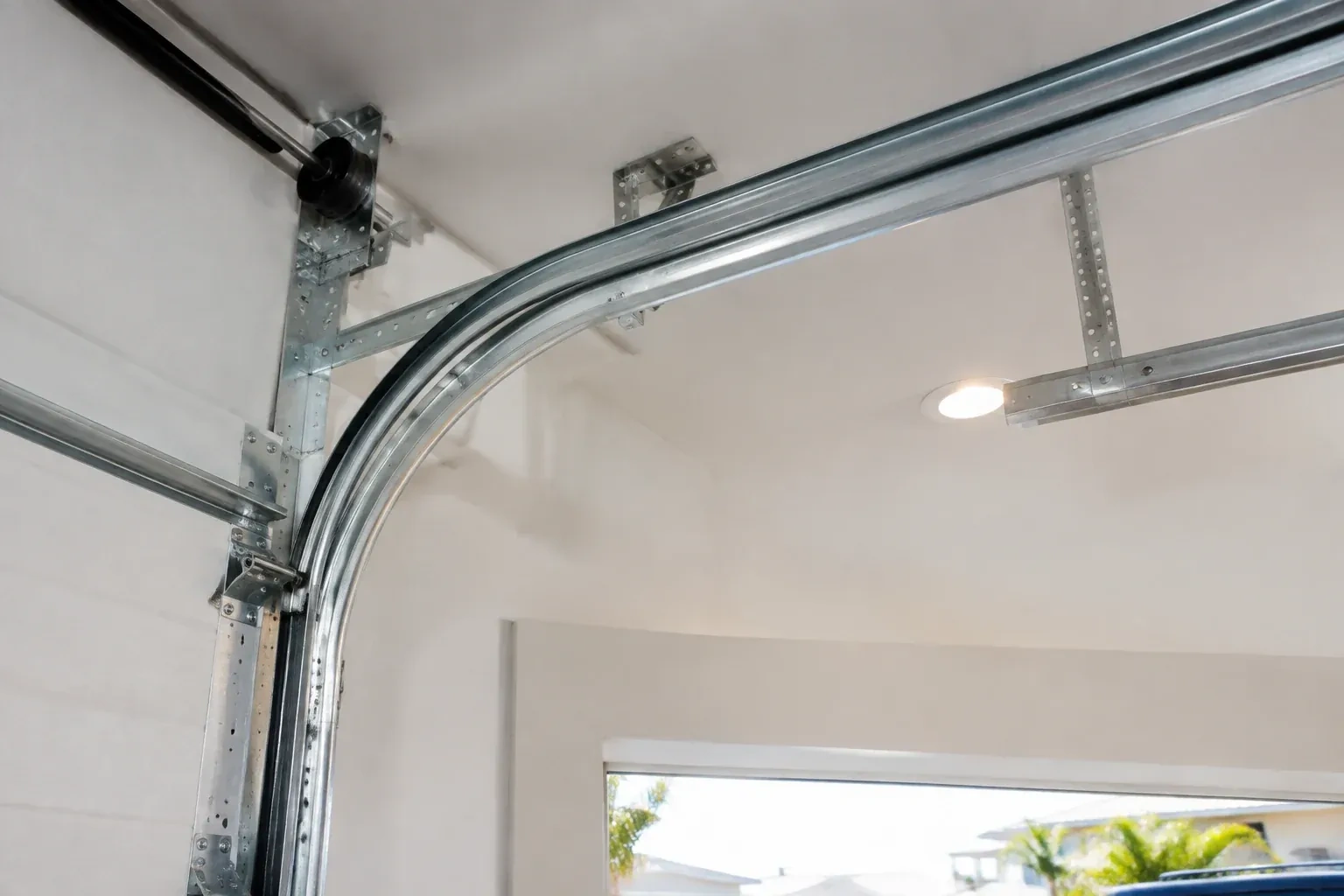
- Garage Door Track Repair or ReplacementHalfway up, the door lurches and one roller rides onto the lip of the channel.
- Garage Door Cable ReplacementAfter years of slushy winters the cables look thinner near the bottom brackets, with rust streaks running down the door where they attach.
- Torsion Spring ReplacementOne side of the door sits higher than the other in the tracks, and a lift cable is hanging slack or has jumped off its drum.