Springs · Newmarket
Garage Door Track Repair or Replacement
Halfway up, the door lurches and one roller rides onto the lip of the channel.
In plain words
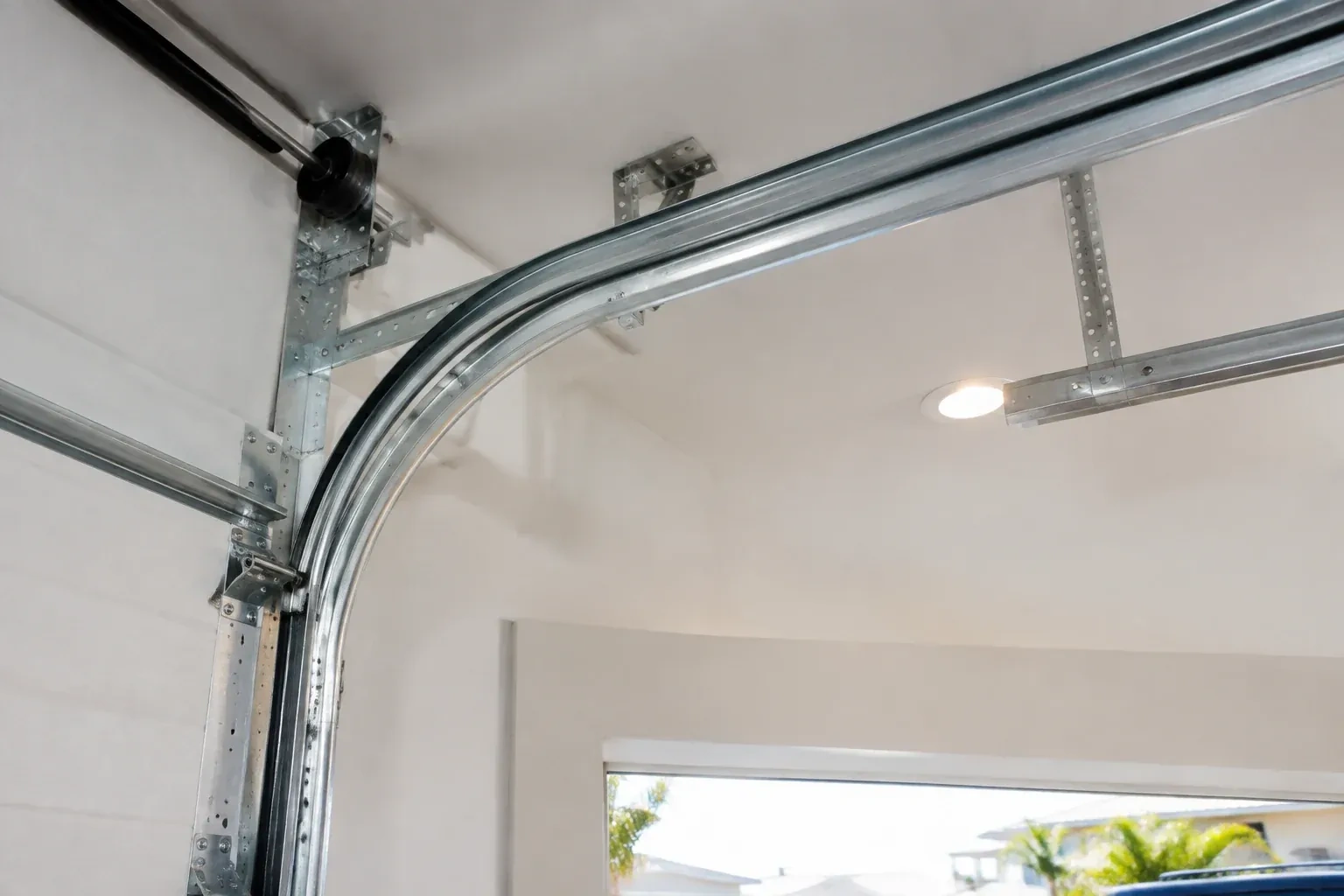
Vertical track is fixed to the jamb in one of two ways, and the assessment begins by reading which one your door has. Bracket-mounted track hangs on a few L-shaped jamb brackets, each lag-screwed into the wood, and can be shifted a little at each bracket to set spacing and plumb. Angle-mounted track uses a full-height continuous angle and is common where sideroom is tight. Either way the vertical run ends at a flag bracket that also carries the horizontal track and, on a torsion door, the spring shaft bearing. Track repair works with those fixings, tightening, replacing or repositioning them so the run sits true.
How the visit goesThe door climbs crooked, one side clearly ahead of the other. Nothing looks broken, but the two tracks sit different distances from the door, and one leans in toward the opening near the top.
Garage Door Track Repair or Replacement
How the visit goes
The curve and the flag bracket
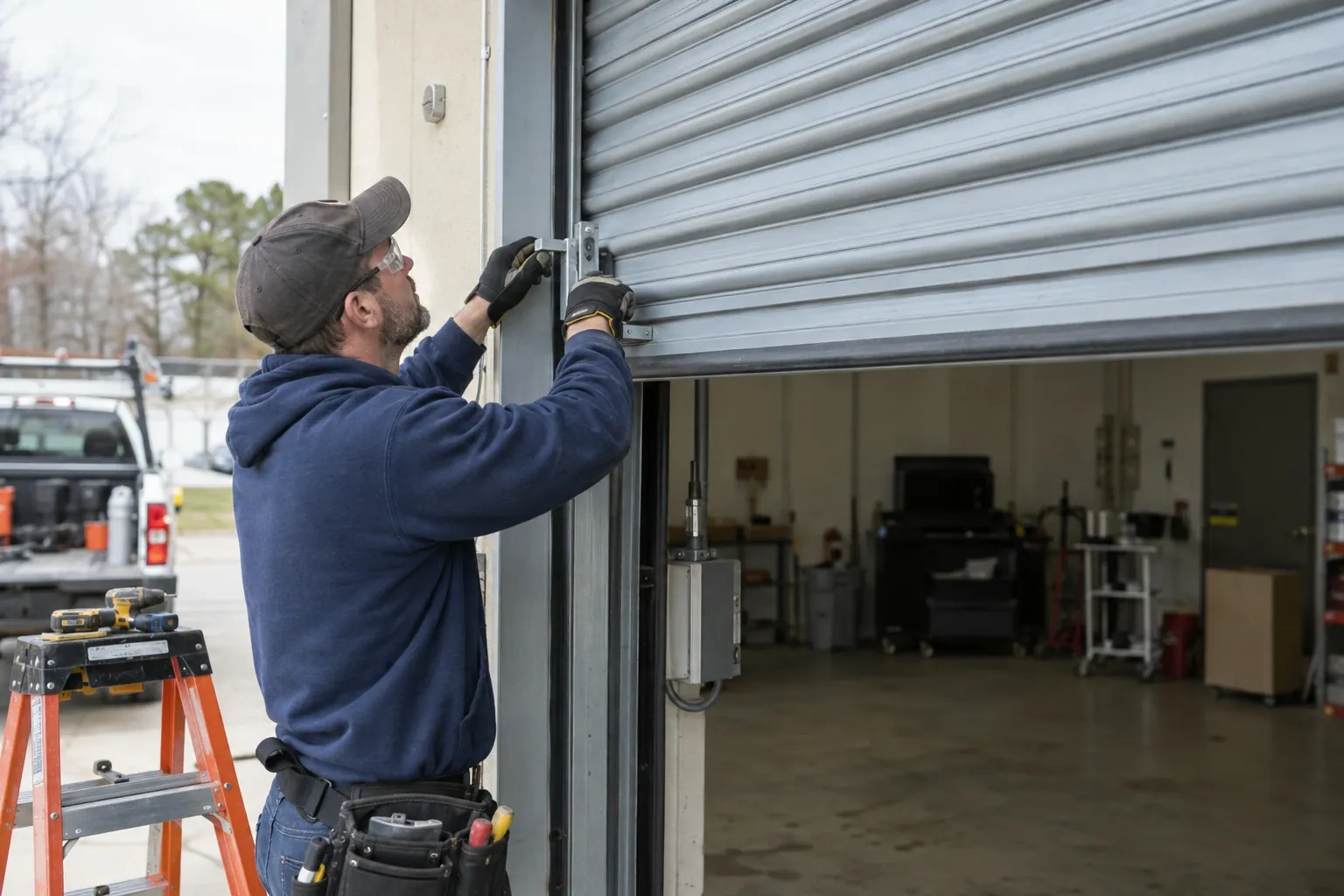
The curved piece where vertical meets horizontal takes the door's weight at the moment its direction changes, and it is the part least forgiving of a bend. The technician checks the curve for flattening, a twist or a kink, and confirms both sides share the same radius. Above it sits the flag bracket, the L-shaped angle that ties vertical track, horizontal track and, on a torsion door, the end bearing plate together. A loose or bent flag bracket shifts everything it holds, so its fasteners and squareness are checked with particular care, and the technician notes that the springs will be unloaded before that bracket is moved.
Fixing into sound framing
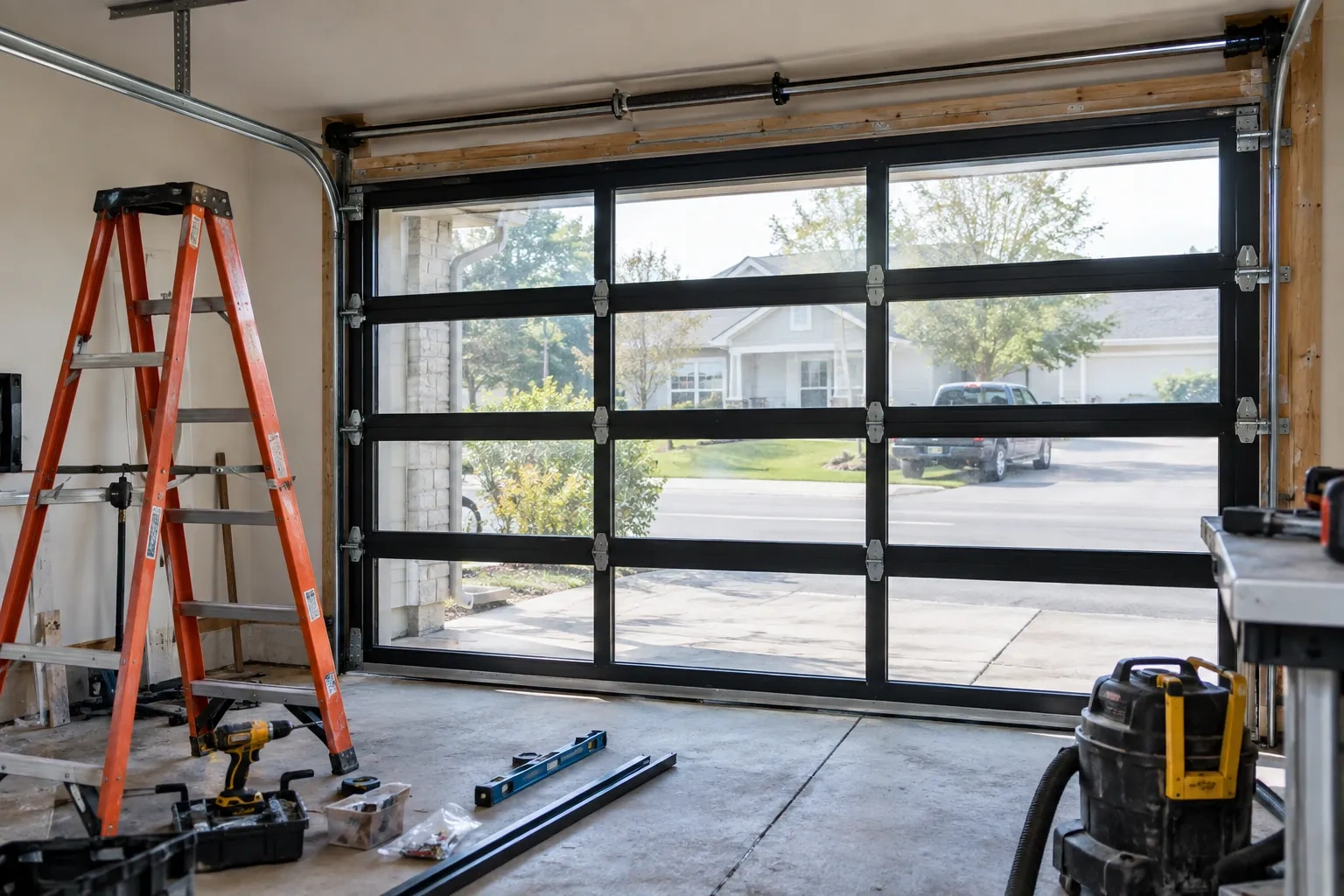
Track is only as steady as the wood it is screwed to. Where the bottom of a jamb has gone soft, the technician cuts back to solid timber and sisters a new piece alongside or replaces the lower length, fastening it through to the framing behind. Enlarged or stripped screw holes higher up are plugged and re-drilled, or the bracket is moved to fresh wood. Lag screws of the right length and diameter are driven into the jamb, and any hanger anchored into ceiling finish alone is moved to a joist or given a length of angle to reach one. This is unglamorous work, and it is the reason the alignment lasts.
Keep the track clean, lubricate the rest
Follow your door's own manual on the track: many makers want it kept dry and clean, since grease there collects grit and sawdust and lets a roller skid rather than turn, which is exactly how tracks get worn and spread, while others call for a lubricant at the bend specifically. Wipe the inside of each channel with a rag a couple of times a year, and clear any leaves or cobwebs from the horizontal runs. The moving parts get their own lubricant too, the roller bearings, hinge pins and springs, in the type and points the manual specifies. That division of labour keeps the newly set track smooth for a long time.
Garage Door Track Repair or Replacement
In the van
Lag screws and track bolts
Perforated angle back hangs
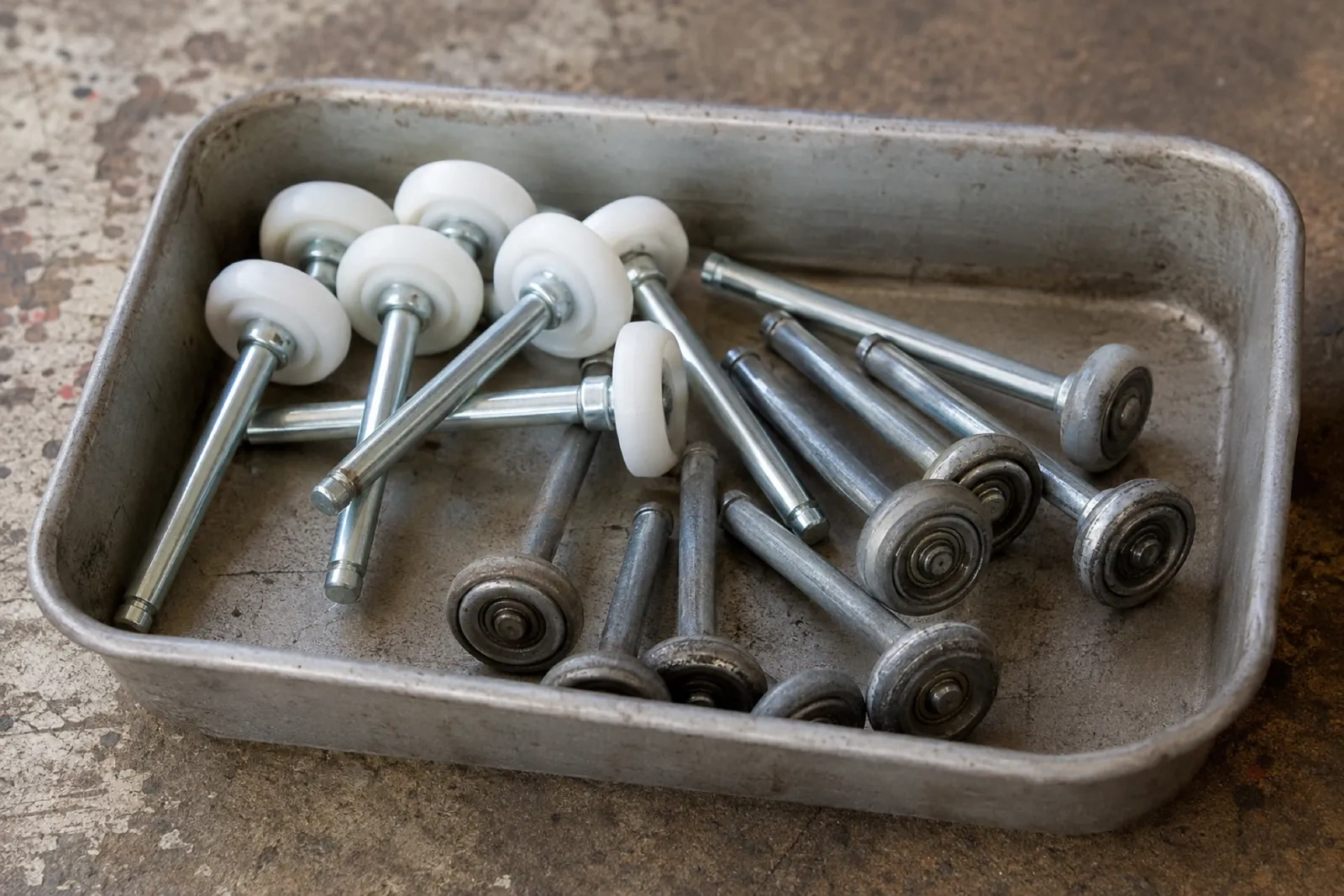
Replacement rollers and hinges
Vertical track, two-inch or three-inch
Horizontal track with curve
Garage Door Track Repair or Replacement
What affects the quote
Opener adjustment afterwards
A door running on a freshly aligned track often needs the opener's travel limits and force reset and its reversing tested. That short adjustment is named when it is needed.
Rollers, hinges and top fixtures damaged alongside
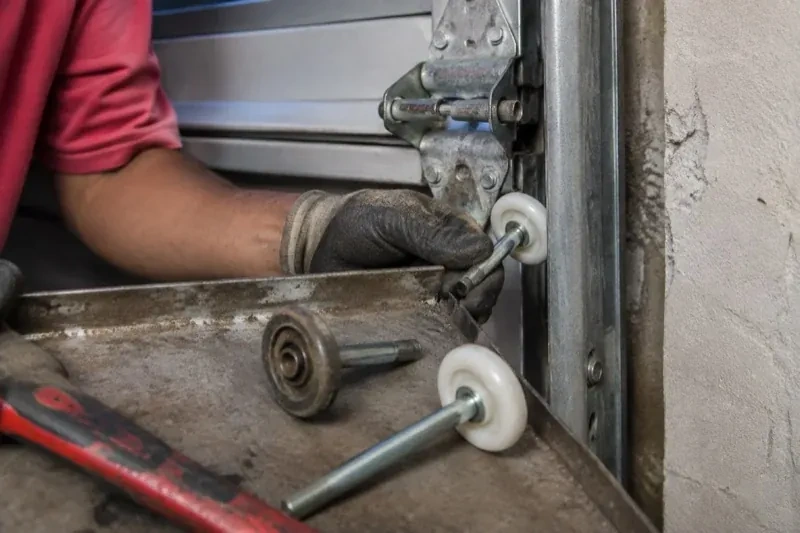
Parts that suffered while the door was catching, such as flat-spotted rollers, split hinges or bent top fixtures, are offered as their own items so the new track is not chewed by the old damage.
Straighten or replace, piece by piece
A dent dressed in place is labour only, while a kinked, cracked or rusted length means a new piece of track. The quote lists which pieces get which treatment.
What to have ready
- Is it a single or a double door, and roughly how tall?
- Do you know what caused it, such as a car, a ladder or stored items?
- Is there one spring above the opening, or springs along the tracks?
Garage Door Track Repair or Replacement: questions
QuestionsMy door came off its track last month. Is this the same service?
It is the follow-on. Putting a door back on its track deals with the rollers and gets the door running again; track repair deals with the reason it left. If the reset showed a spread channel, a bent section or loose brackets, those are corrected now so the rollers stay put. Where nothing on the track was at fault and the cause was a cable or an obstruction, the track is simply checked and confirmed.
The wood behind the track is rotten. Can the track still be fixed?
Yes, and the wood is part of the job. Screws will not hold in soft timber, so the technician cuts back to solid wood and sisters a new length of jamb alongside or replaces the lower section, fastening it through to the framing. The brackets are then lag-screwed into the fresh wood and the track set to the door. In older garages this repair is common, and it is what makes the alignment last.
Should I keep using the opener while the track is bent?
It is better to leave the door where it is and use another way in and out. An opener pushing a door through a damaged section pulls rollers out of the channel, twists the top section and can turn a small dent into a jammed door off its track. Industry guidance after any impact is to stop operating the door and have it assessed. Leaving it still keeps the repair small.
Related services
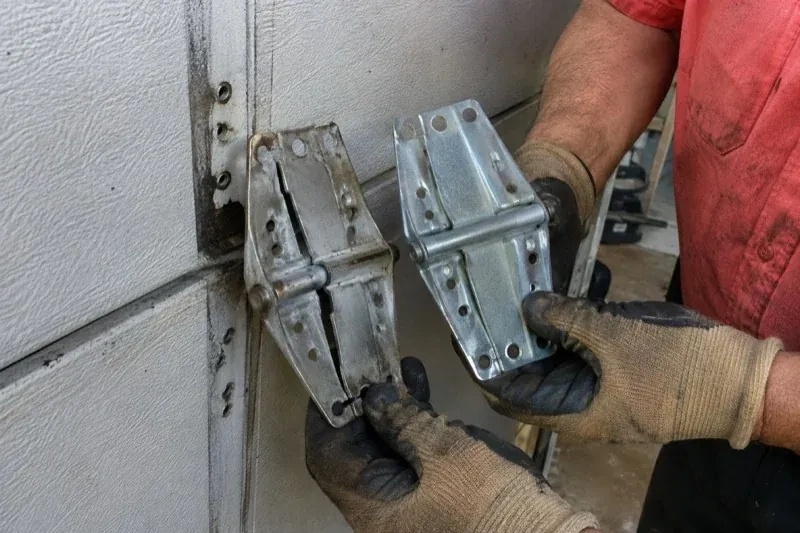
- Garage Door Hinge ReplacementThe roller at the top of the second panel is leaning outward and only half of the wheel is still in the track.
- Garage Door Cable ReplacementAfter years of slushy winters the cables look thinner near the bottom brackets, with rust streaks running down the door where they attach.
- Torsion Spring ReplacementOne side of the door sits higher than the other in the tracks, and a lift cable is hanging slack or has jumped off its drum.