New Doors · Newmarket
Commercial Sectional Door Repair
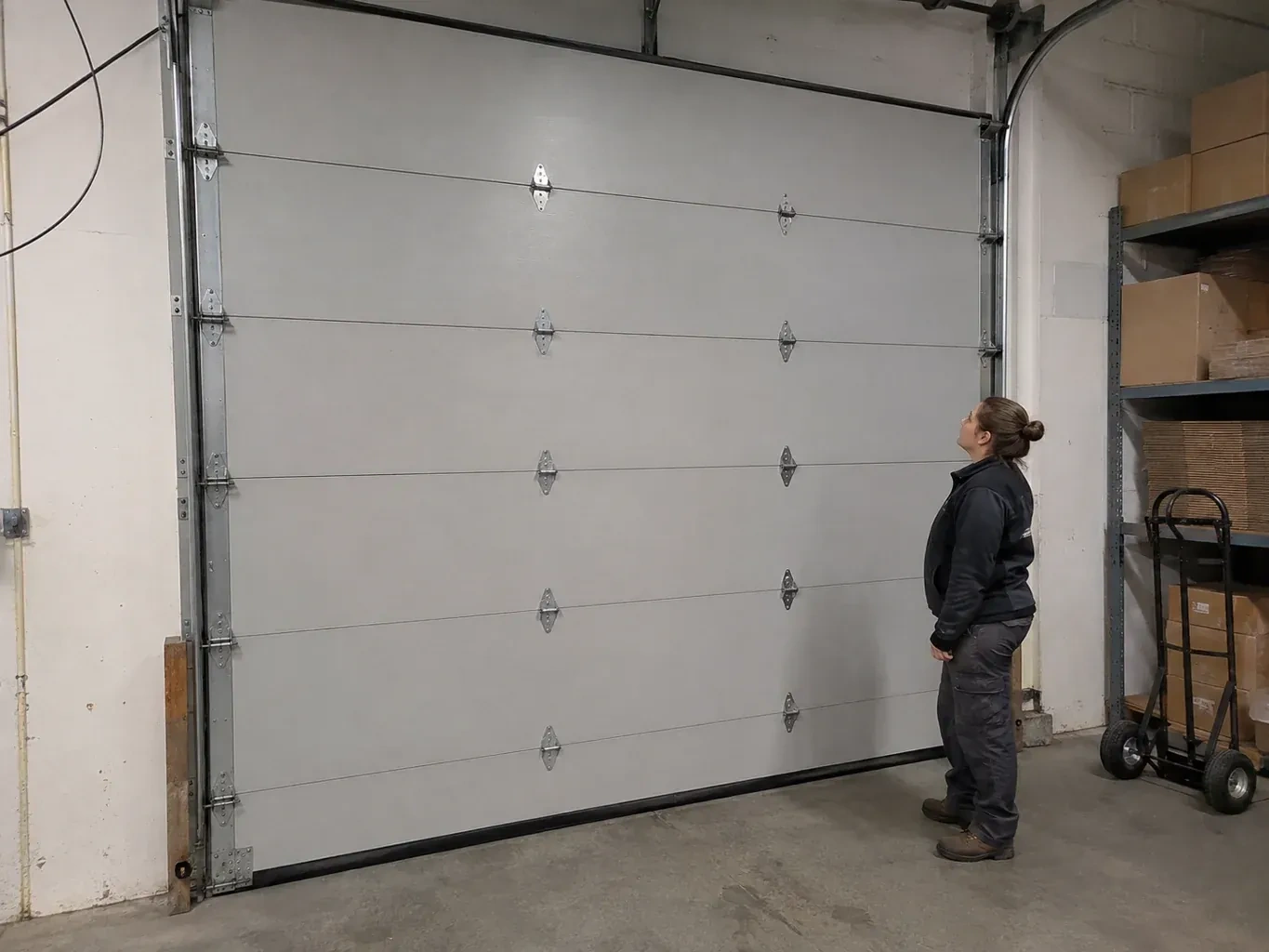
A high-lift door begins smoothly, then a cable loses tension as the top sections change direction.
In plain words
For a facility with several sectional doors, the repair visit can separate one isolated failure from wear shared across similar openings. Door identification, cycle demand and service history help explain why one bay developed loose hinges, tired rollers or spring imbalance first. The affected opening receives the defined repair, while comparable components on adjacent doors can be visually noted for planning. A clear service record then identifies what changed, which settings were tested and what routine observations facility staff can continue between visits.
How the visit goesA forklift clipped the bottom panel while backing through the bay. The section is creased near an end stile, the lower roller rubs the track, and daylight now shows along one corner when the door closes.
Commercial Sectional Door Repair
How the visit goes
Following sound to its source
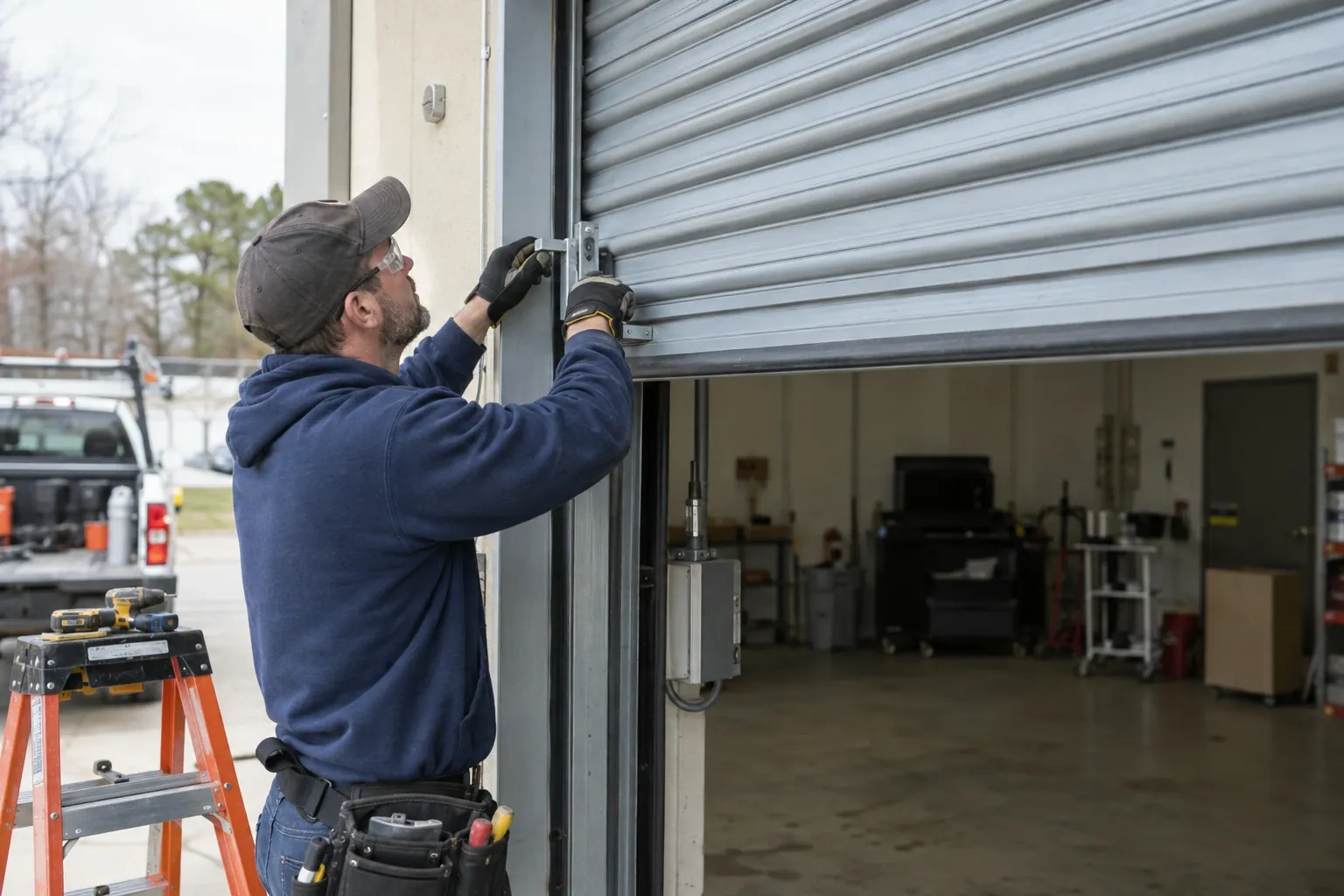
Noise is assessed by location, timing and character. A controlled cycle shows whether a knock occurs at a hinge, a roller entering the curved track, a bearing on the shaft or the operator drive. The technician watches for metal dust, polished rub marks, loose fasteners, roller play and track movement while listening. Door speed and vibration are compared through the vertical and horizontal portions of travel. This approach keeps several sounds from being treated as one problem and identifies the component producing each repeatable rattle, scrape or growl.
Replacing an impact-damaged section
The affected section is supported while hinges, rollers and connected hardware are transferred or renewed. The replacement is matched for thickness, construction, profile and required reinforcement so it fits the neighbouring sections and carries the same hardware pattern. Bent end stiles or struts are addressed as part of the section assembly. Rollers are returned to the correct hinge positions, section joints are aligned and fasteners are set securely. Track clearance is then checked through the curve so the new panel travels without rubbing or opening gaps.
A better seal at the threshold
The renewed bottom retainer and seal follow the floor more evenly, reducing the route for drafts, grit and slush. The threshold still benefits from regular clearing, especially when packed snow or ice changes where the door lands. Drainage near the opening should direct meltwater away instead of leaving it beneath the rubber. Staff can inspect the seal ends for shrinkage, tearing or displacement during cleaning. Catching a small gap early protects the lower panel and helps keep corrosive moisture away from nearby brackets and cable connections.
Commercial Sectional Door Repair
In the van
Torsion springs
Bottom seal and retainer
Lift cables and drums
Commercial door sections
Bottom fixtures
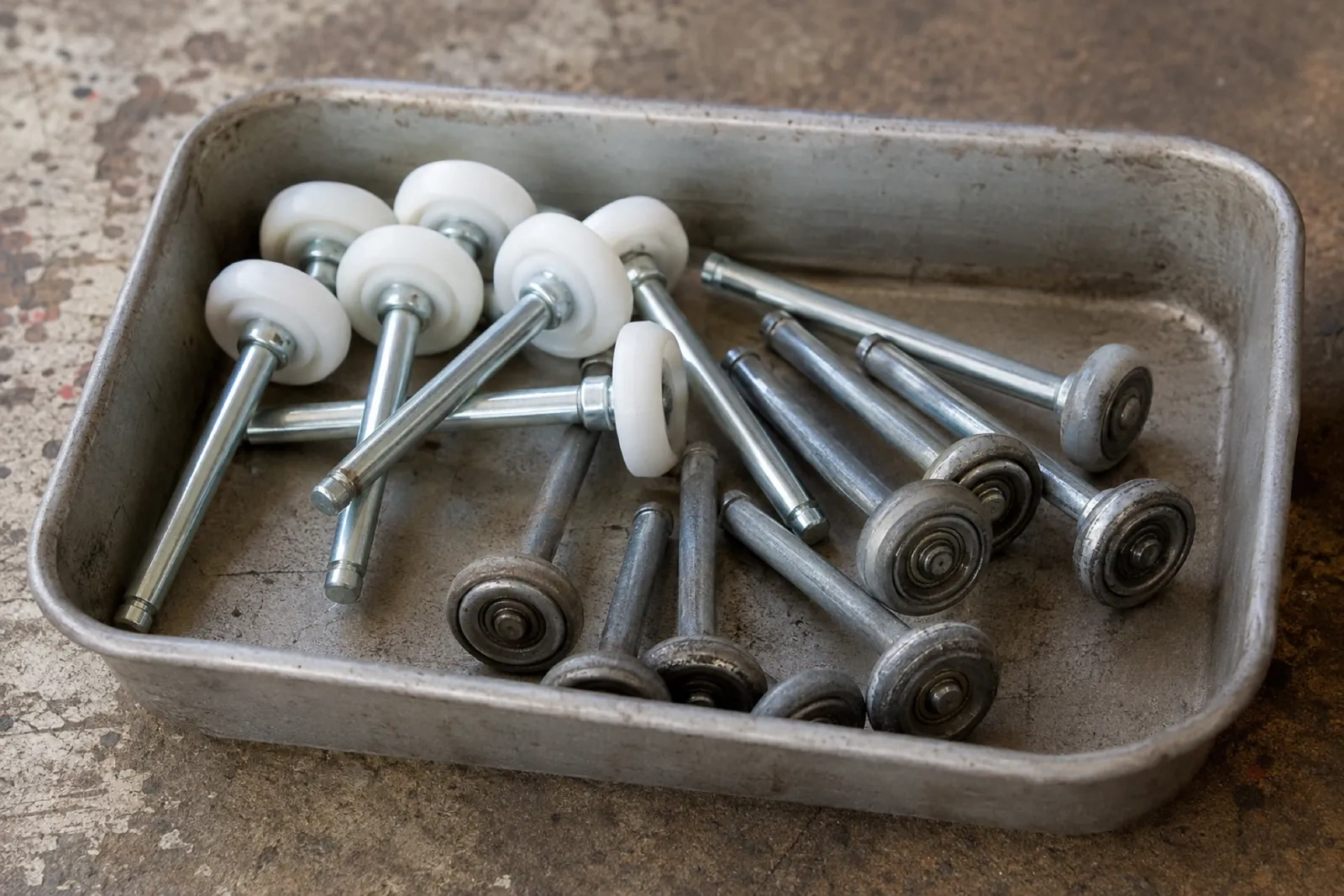
Commercial Sectional Door Repair
What affects the quote
Counterbalance components involved
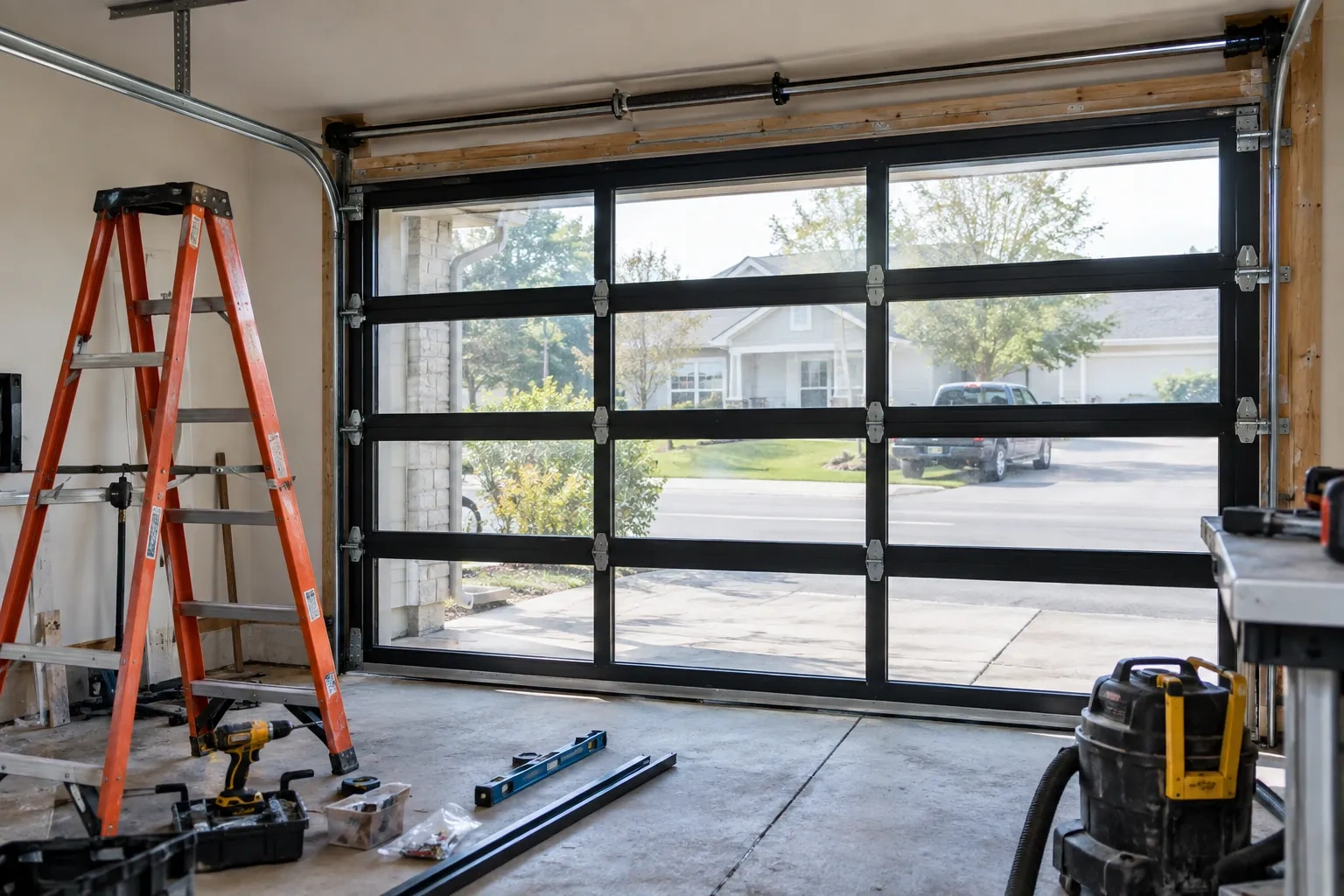
Spring count, shaft arrangement, drum type, cable dimensions, bearings and bottom fixtures determine which tensioned parts must be controlled, replaced and reset together.
Access to overhead hardware
Ceiling height, loading equipment, storage, piping and the location of shafts or high-lift track influence the access equipment and work-zone setup required.
Documentation or rated-assembly needs
Door labels, fire-safety records, site procedures and required test documentation can add coordination and component-verification steps to work on a regulated closure.
What to have ready
- Do you have the model, serial number and service record?
- Are any cables visibly loose, crossed or frayed?
- Is the door operated electrically, by hoist or by hand?
Commercial Sectional Door Repair: questions
QuestionsCan corrosion on lower hardware be repaired?
Surface condition and remaining material determine the scope. Light contamination may be cleaned during maintenance, while pitted cables, weakened brackets, seized rollers or compromised fasteners are replaced with compatible components. The source of moisture is considered too. Clearing drainage, renewing seals and removing accumulated salt help protect the repaired lower section and its hardware.
Does fire-rated status affect sectional door repair?
It can. If the opening is part of a required fire separation, its label, approved assembly, release equipment and building fire-safety documentation shape what components and procedures are appropriate. Share any door labels or inspection records before work begins. The repair can then preserve the intended closure function and align with the property's applicable fire-safety responsibilities.
What should be recorded after the work is finished?
Keep the door asset number, date, reported symptom, diagnosed cause, parts installed, adjustments made and functions tested. Spring, cable, panel and operator identifiers are especially useful for later service. Notes about impact location, corrosion or unusual cycle demand add context. A precise record helps facility staff compare future changes and prepare relevant information for the next visit.
Related services
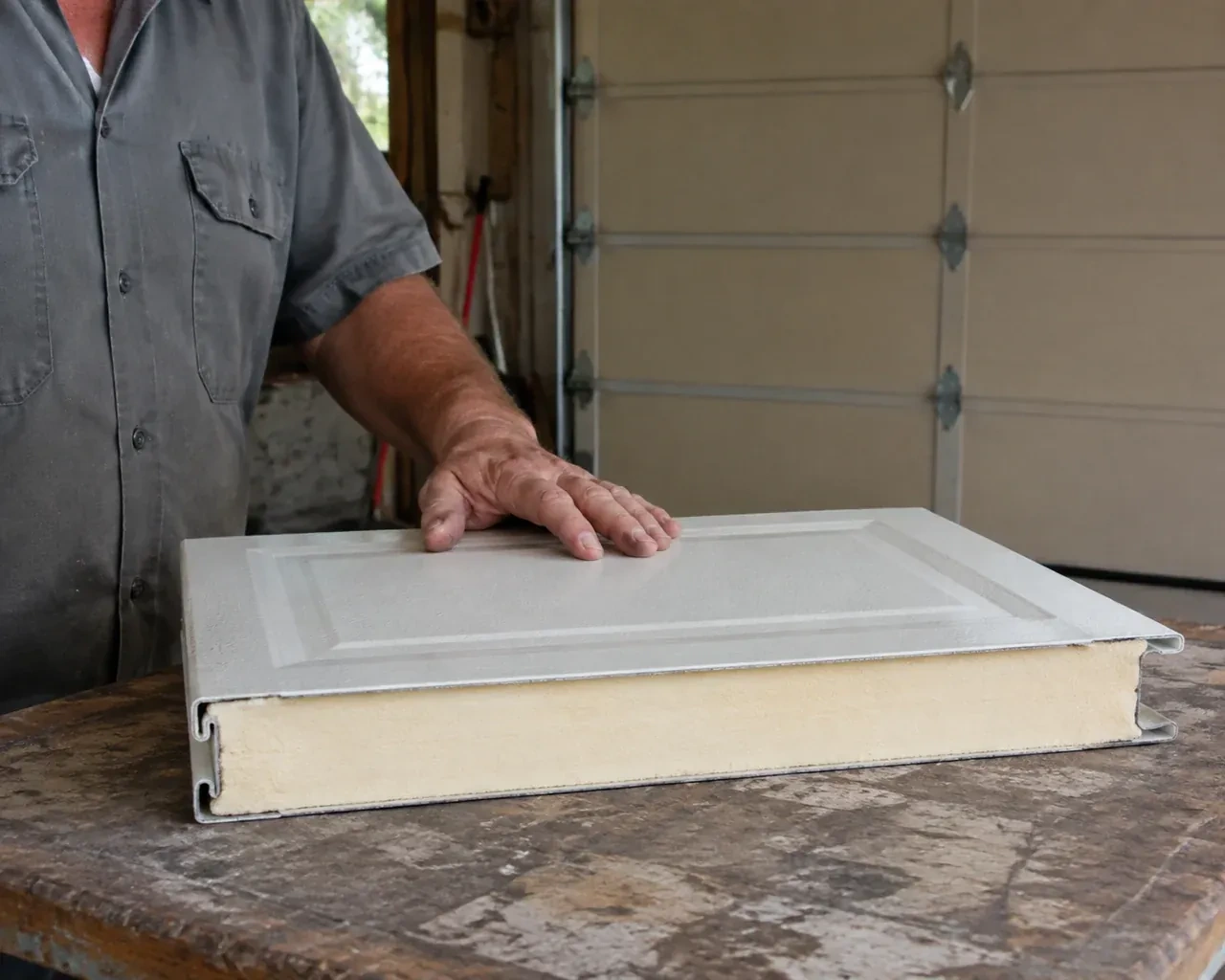
- Insulated Steel Garage Door InstallationDaylight appears beside the closed door and powdery snow collects just inside after windy weather.
- Wind-Rated Garage Door ReplacementYou are combining two narrow garage bays into one broad opening.
- Carriage-House Garage Door InstallationYour garage door works, yet its broad plain panels feel disconnected from the brick, gables and entry details around them.