Repairs · Newmarket
Garage Door Bottom Seal Replacement
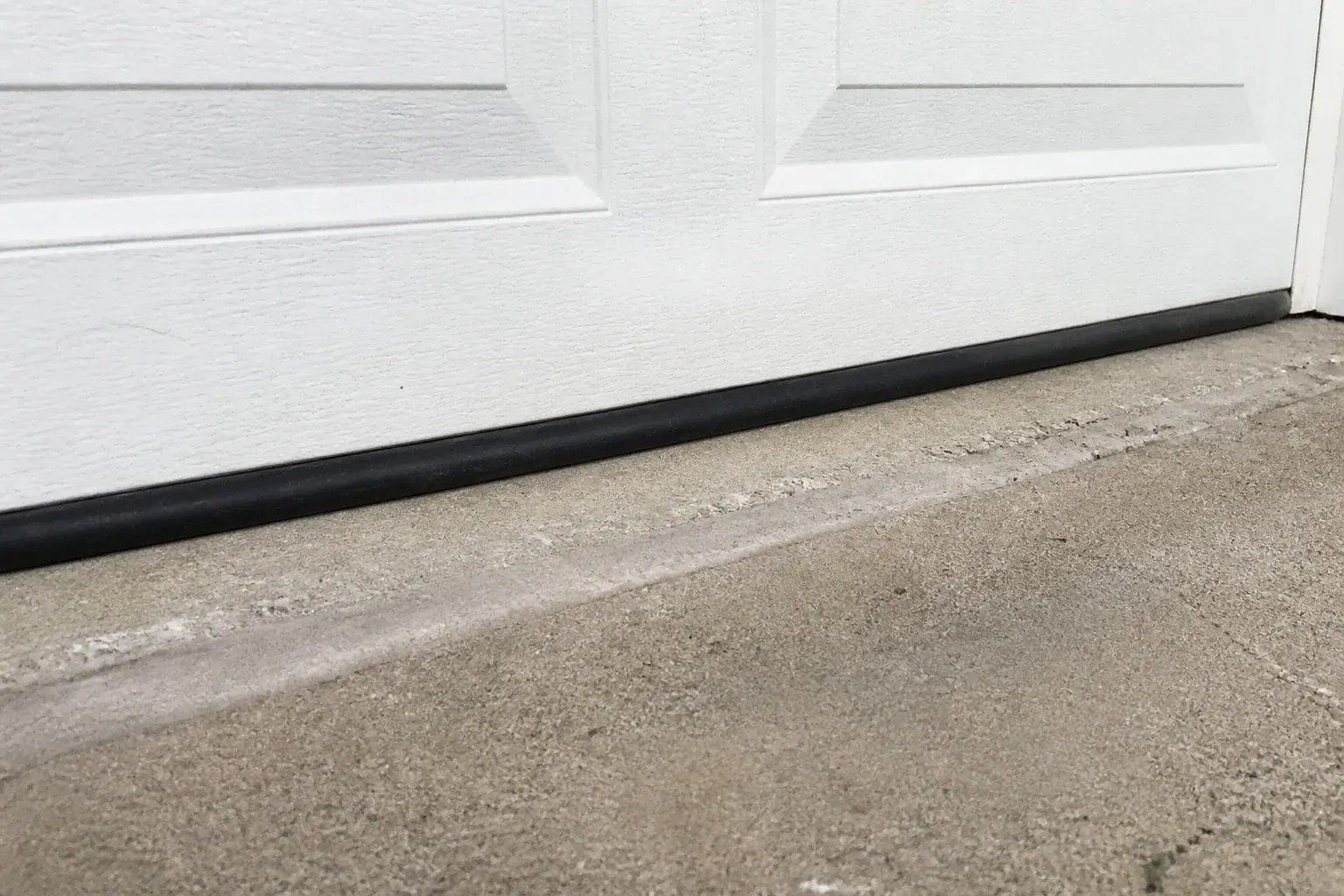
The gap under the door is a finger wide at one end and nothing at the other.
In plain words
The bottom seal is one part of a weather line that runs all the way round the door. Vinyl-finned stop moulding seals the jambs and header, the section joints have their own tongue-and-groove or shiplap seals, and a threshold seal glued to the floor can meet the bottom strip where a slab slopes the wrong way. Bottom seal replacement addresses the piece that takes the most punishment, and while the technician is there the rest of the perimeter is looked over. Where the side or top strips are torn or shrunk, doing them in the same visit gives a garage sealed on all four edges rather than three.
How the visit goesEvery mild afternoon the snow melts off the car, runs to the door, and by morning the rubber strip along the bottom is frozen to the concrete. Last week the opener lifted the door and left half the seal on the floor.
Garage Door Bottom Seal Replacement
How the visit goes
Retainer condition and fasteners
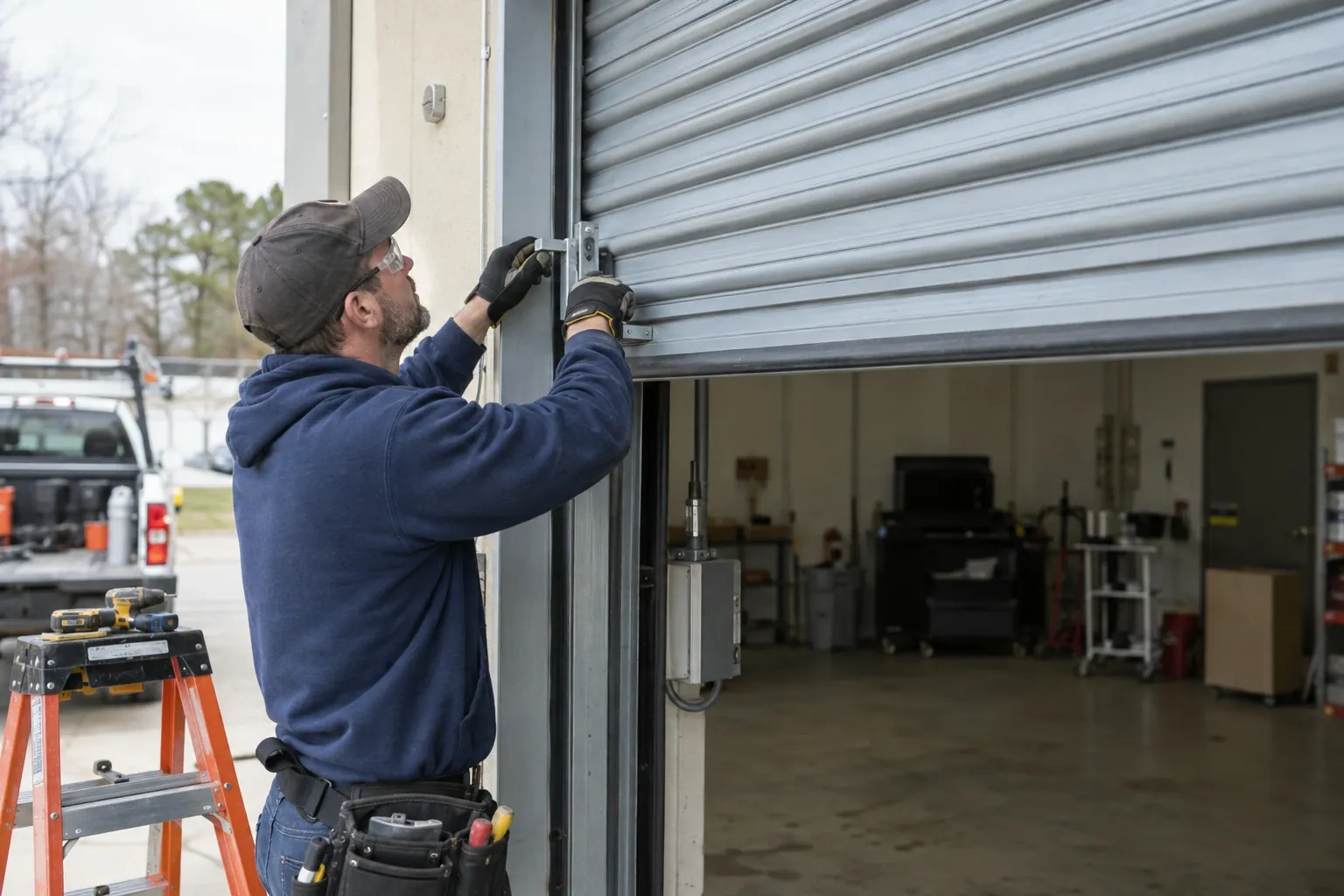
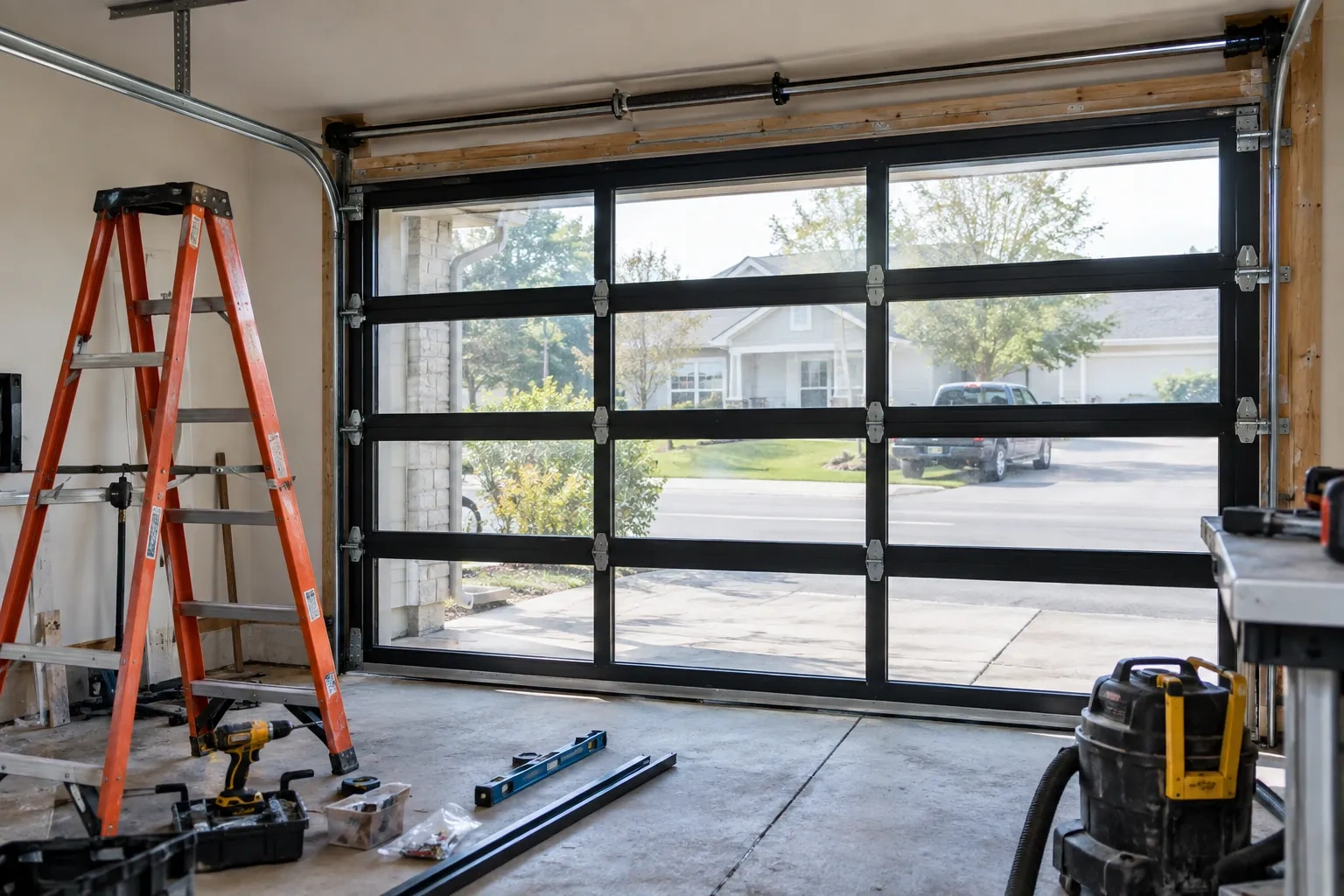
The aluminum or plastic retainer that grips the seal is inspected along its full length. The technician looks for kinks where something struck it, channels that have been spread open, corrosion where salt has sat, and screws that have rusted or pulled loose from the rail. A retainer that is straight and tight is reused; one that is damaged is measured for a matching replacement so both channels line up with the new seal. On doors where the retainer is part of a plastic bottom cap, a cracked cap is noted and a screw-on aluminum retainer is offered as the practical repair.
Wood doors and nail-on strips
A wood garage door usually carries a flat or angled strip of vinyl or rubber nailed directly to the bottom rail rather than a channel seal. The technician removes the old strip and nails, checks the rail for soft spots and cupping, and treats or dries damp wood as needed. The new strip is positioned so its lip angles toward the outside and touches the floor along the full width, then fastened with galvanized nails or screws at close, even spacing so it cannot ripple. On a rail that follows an uneven floor, the strip's flexibility takes up the difference.
A record of the profile and size
Before leaving, the technician tells you what went on the door: the seal profile, whether T, bead or bulb, its width and height, the material, the door width it was cut for, and whether the retainer was renewed. Write this on a card by the opener or inside the manual. Bottom seals wear out on a schedule of years rather than decades, and knowing the profile means the next one can be ordered and fitted without measuring from scratch. If a threshold seal was added, its length and type belong on the same card.
Garage Door Bottom Seal Replacement
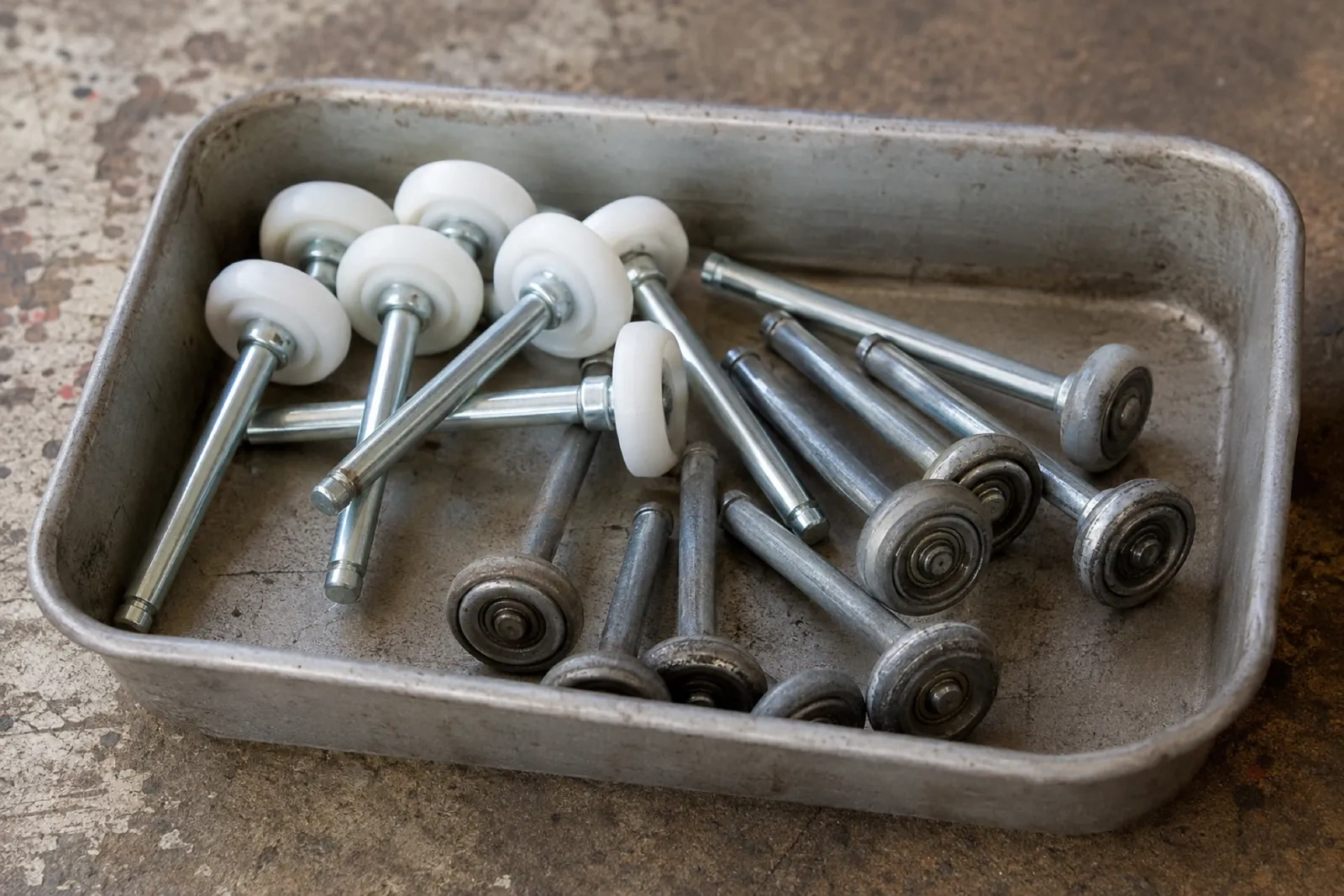
In the van
Threshold seal and adhesive
Wire brush and scraper
T-style bottom seal
Nail-on vinyl strip for wood doors
Aluminum bottom seal retainer
Garage Door Bottom Seal Replacement
What affects the quote
Bottom section repairs
A rusted, dented or bowed steel bottom rail, or a rotted wood rail, is pointed out and any repair or reinforcement offered as an option beside the seal work.
Threshold seal added
Where a floor threshold is recommended, its length, its type, whether rubber or aluminum-backed, the adhesive and the floor preparation before it is laid appear as a line of their own.
Access and clearance
Storage, a vehicle that must stay inside, or shelving against the bottom of the door slows the work. A clear metre inside the door makes the visit shorter.
What to have ready
- What is getting in: light, drafts, water, snow, leaves or pests?
- Is there a car or storage inside that needs moving before the visit?
- Are the side and top weather strips also worn or torn?
Garage Door Bottom Seal Replacement: questions
QuestionsIs this something I can do myself?
Many homeowners do, and a technician's value lies in the parts that go wrong: identifying the exact profile so the seal seats, freeing a strip that has fused into its channel, spotting a retainer or door-level problem behind the gap, and resetting the opener's limit and force so the door lands gently and still reverses on an obstruction. If you would rather have it measured, fitted and tested in one go, that is what the visit is for.
What happens during the visit?
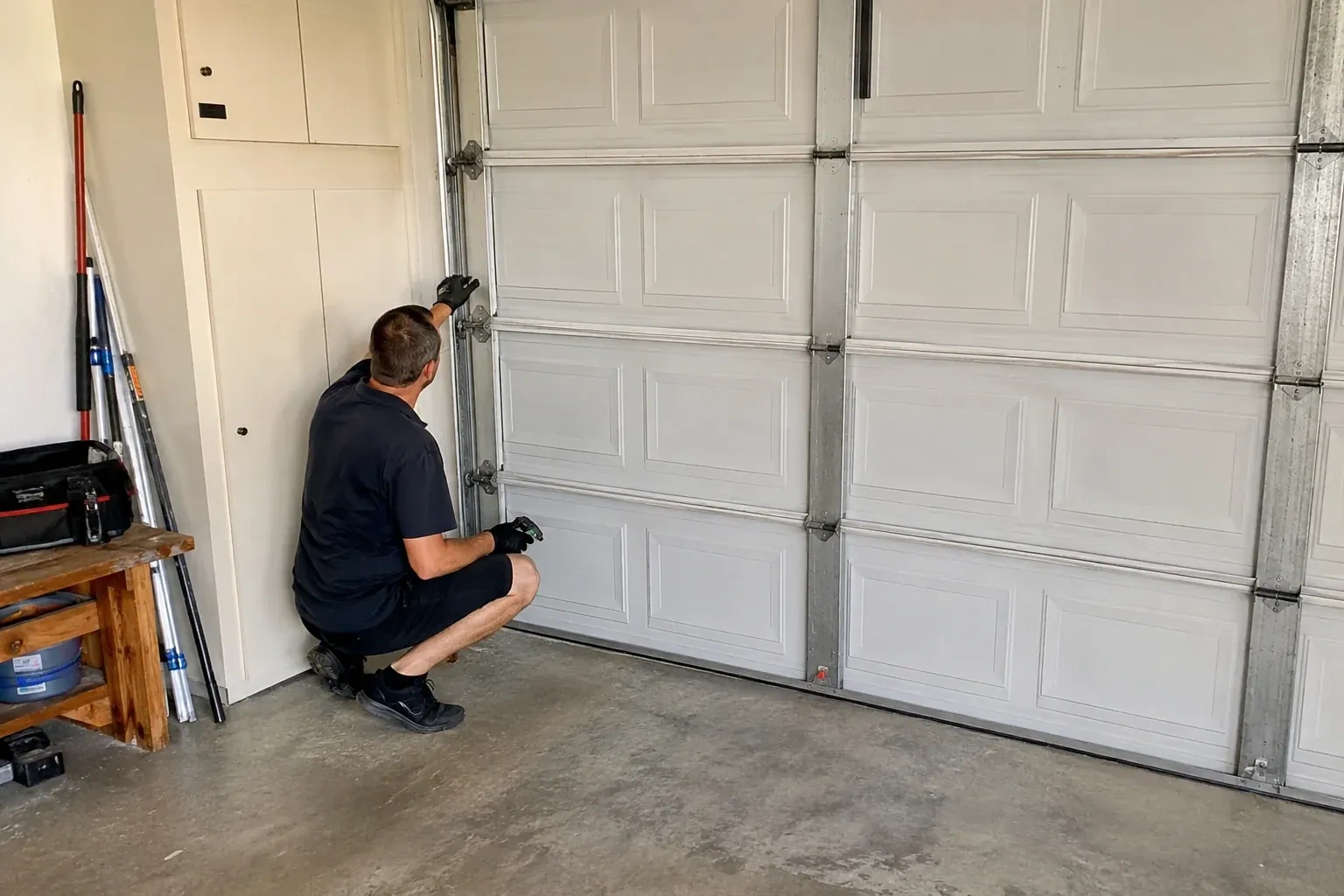
The technician maps the gap with the door closed, checks the door is level and the bottom section straight, and identifies the retainer and profile. The opener is disconnected and the door clamped at working height. The old seal comes out, the channels are cleaned, a new seal is cut and fed in, and any retainer work is done. The door is then closed under power, the opener reset, and the reversing and photo-eye tests run.
Why does the seal freeze to the floor, and what should I do when it does?
Snow melts off the car, runs to the low point at the door and refreezes overnight around the seal. When that happens, leave the remote alone, since the opener will tear the strip or pull the door out of level. Free the seal by hand with gentle warmth along the line or by working a plastic scraper under it, then run the door. A film of silicone on the seal each autumn largely prevents it.
Related services
- Garage Door Tune-UpThe door lands with a thud you can feel through the kitchen floor, and sometimes it bounces back up a few centimetres before settling.
- Off-Track Garage Door ResetThe rollers on the door have been squealing for months.
- Garage Door Panel ReplacementAfter an overnight freeze the door stuck to the slab, the opener strained, and something gave.